Mass Texting for Manufacturing: 10 Use Cases to Improve Factory Floor Communication

Key Takeaways
|
Manufacturing environments often involve noisy production lines, time-sensitive operations, shift-based teams, and workers with limited desk access.
For example, if the morning shift fails to inform the afternoon shift about production bottlenecks or machine maintenance, productivity can quickly decline. High noise levels on the plant floor also make verbal communication difficult, causing workers to miss critical updates.
Such situations are common in manufacturing, where disconnected frontline workers and communication gaps often disrupt operations.
Emails, printed notices, verbal communication, or bulletin boards are slow and unreliable ways to reach every worker quickly.
This is where a mass texting service comes in. With SMS messages achieving up to 98% open rates, it provides a fast and direct way to communicate with workers in real time, making it a highly effective communication tool for the manufacturing industry.
In this article, we’ll explore the importance of mass texting for manufacturing and the key use cases that help improve factory floor communication and operational efficiency.
Jump to: |
Why Communication is Critical in the Manufacturing Sector?
In manufacturing, communication directly impacts quality, safety, productivity, and profitability. Multiple teams, from production, maintenance, and logistics to quality control and supervisors, are required to work in sync, unlike desk-based industries.
Even a minor miscommunication or a small delay can halt operations, disrupting productivity and production lines.
On the other hand, clear and timely communication ensures that machine issues are reported immediately, shift changes happen smoothly, safety protocols are duly followed, and production targets are met on time.
Besides, clear communication also plays a crucial role in meeting regulatory compliance standards and improving workforce engagement, helping employees and workers feel informed and valued.
Why Traditional Communication Methods Fail on the Factory Floor?
Outdated and inefficient methods, such as bulletin boards, printed notices, or emails, create gaps and delays when it comes to communication in manufacturing. Here are the primary reasons why these traditional methods don’t work in manufacturing:
- Most factory floor workers are non-desk workers, making it ineffective and inefficient for them to check their emails or notices regularly. At the same time, not every factory floor worker owns an email account, making it an unreliable communication channel.
- These workers work in a noisy, physically demanding environment with loud machinery and expansive facilities, making PA systems, announcements, and verbal communication unreliable. These PA systems also don’t support or enable two-way communication.
- Manufacturing workers are often highly dependent on supervisors. Information flowing through these leads increases the risk of distortion, delays, and inconsistent messaging.
- In a shift-based work environment, ensuring that every employee receives the same information at the right time becomes difficult. And calling every worker individually is a time-consuming and unnecessary process when companies can send a single message to hundreds of employees with a single click.
- Paper-based memos and board notices are easy to overlook and fail to deliver urgent, time-sensitive messages in real-time. Besides, it requires workers to physically walk by the boards to read them, which is a waste of time and effort.
Overall, traditional channels create gaps and are unreliable, especially when critical situations strike, such as machine breakdowns, severe weather, and safety hazards. This highlights the need for a faster, scalable, and direct communication channel for the manufacturing environment.
Why is SMS the Best Employee Engagement Tool in Manufacturing?
In the manufacturing environment, communication is expected to be instant, accessible, and reliable to avoid operational and production disruptions and unproductivity.
SMS helps avoid all the above-mentioned challenges manufacturing companies face with traditional communication channels in the following ways:
- SMS provides direct, instant reach to every worker, whether they are at their desks or not. Since nearly every worker carries a mobile phone, SMS for manufacturing provides the fastest way to deliver time-sensitive updates and messages.
- SMS or text messages are typically read within minutes of delivery, resulting in high open and read rates and greater visibility. This makes SMS ideal for emergency notifications, production delays, shift changes, or safety warnings, where immediate action is required.
- SMS enables instant, real-time broadcast alerts in critical situations, such as when machines break down or safety hazards occur, reducing overall downtime and improving the team’s response time.
- SMS works well even without internet access, beneficial for factories and manufacturing companies with limited Wi-Fi coverage. With SMS even working on basic mobile networks and not depending on internet connectivity, it ensures consistent reach across facilities.
- Reliable service providers like TXTImpact provide easy segmentation capabilities, allowing companies to segment worker contacts by shift, department, location, or job role. This ensures only relevant workers receive the right texts, reducing noise and message fatigue.
- SMS supports safety and compliance efforts by providing documented trials of message delivery, safety procedures, logs and audits, and incident reporting, and by supporting compliance updates.
- Compared to installing hardware systems, such as radios, SMS is an affordable, cost-effective communication solution that is also easy to scale across multiple manufacturing plants and locations. Companies can integrate SMS with HRMS, BAS, Legacy Systems, SaaS systems, HMI, ERP, and manufacturing execution systems for automated alerts.
In an industry where every minute matters, SMS provides a simple yet powerful and reliable communication solution, helping companies reduce production delays, resolve issues faster, maintain production schedules, and coordinate teams efficiently.

10 Use Cases of Mass Texting in Manufacturing
Using Mass Text messages, manufacturers can streamline real-time communication across teams, departments, shifts, and facilities without worrying about downtime, reach, or scalability. Here are the ten high-impact use cases of mass texting in manufacturing:
1. Shift updates
Manufacturing operations operate around the clock, often with split or rotating shifts. In situations that require overtime due to work overload or production surges, or when teams need to fill last-minute absences, immediate workforce adjustments can be a hassle.
Besides, companies may at times need to inform employees that a shift is starting an hour early due to a deadline. In such cases, mass texting plays a huge role in conveying the message abruptly.
It allows manufacturing companies to:
|
|
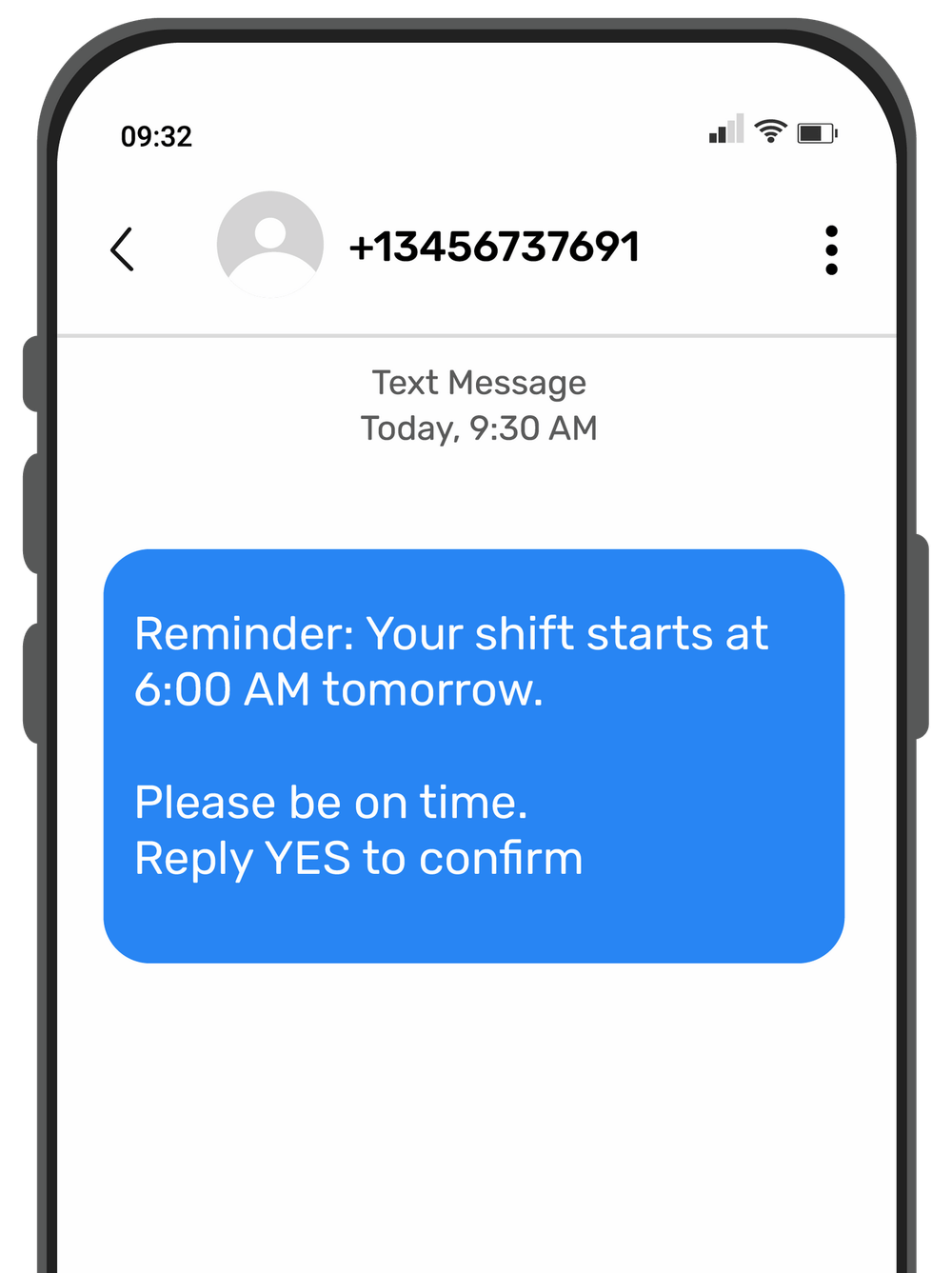
Timely conveying of shift changes reduces absenteeism, eliminates time spent calling employees individually, and prevents production slowdowns.
2. Schedule changes
Besides shift changes, production schedules can also shift frequently due to delayed raw materials, operational bottlenecks, or urgent client orders. Without fast or instant communication, workers may arrive at the wrong or unexpected time or be unprepared for adjusted workloads.
| With mass texting, manufacturing teams can:
|
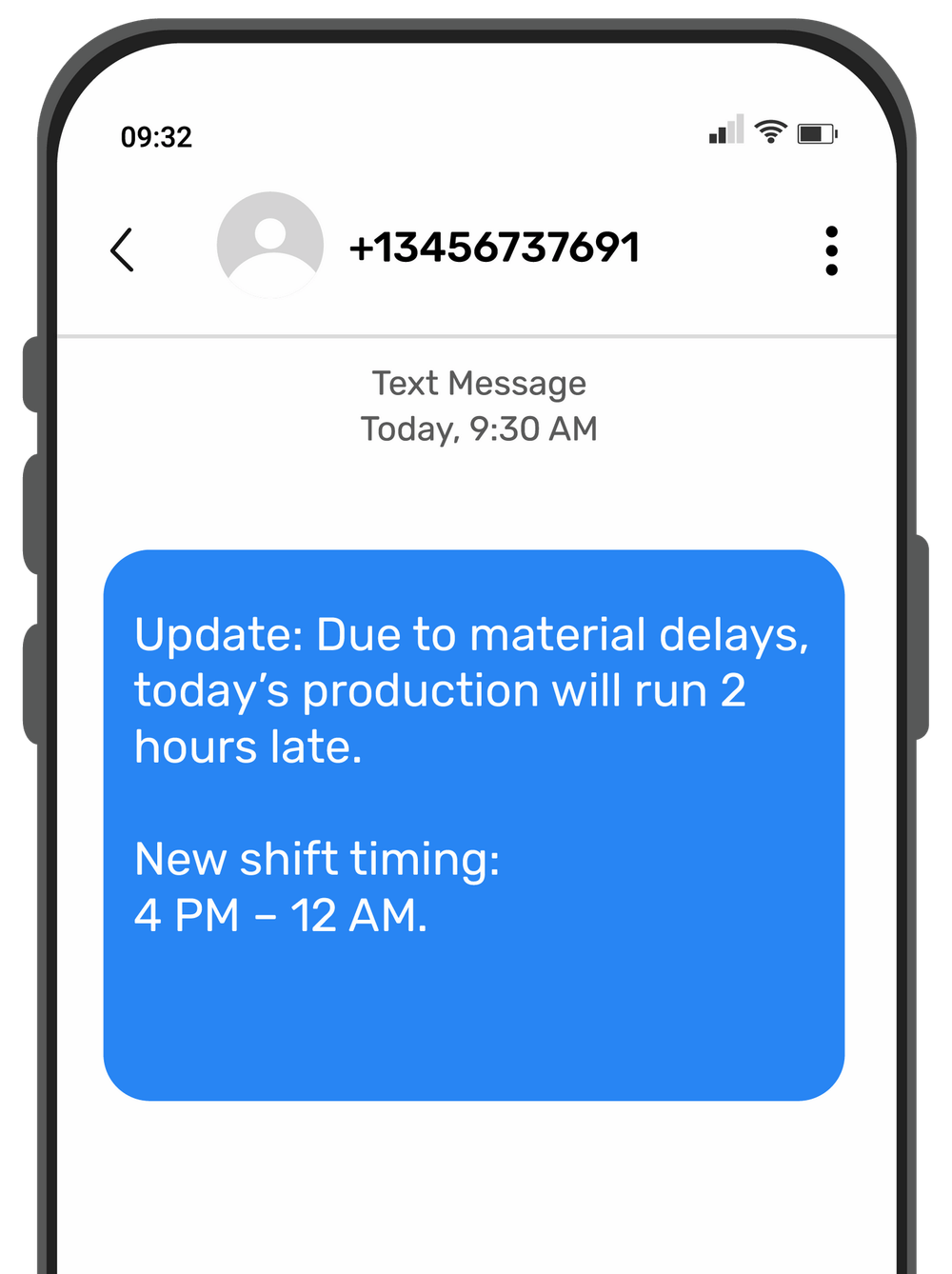
Real-time schedule updates can keep everyone aligned and reduce costly coordination errors.
3. Safety alerts
Heavy machinery, hazardous materials, sudden extreme weather, and high-noise environments pose inherent risks on factory floors. Ensuring immediate communication during such unsafe conditions is crucial to avoid any mishappenings.
Mass texting helps by:
| |
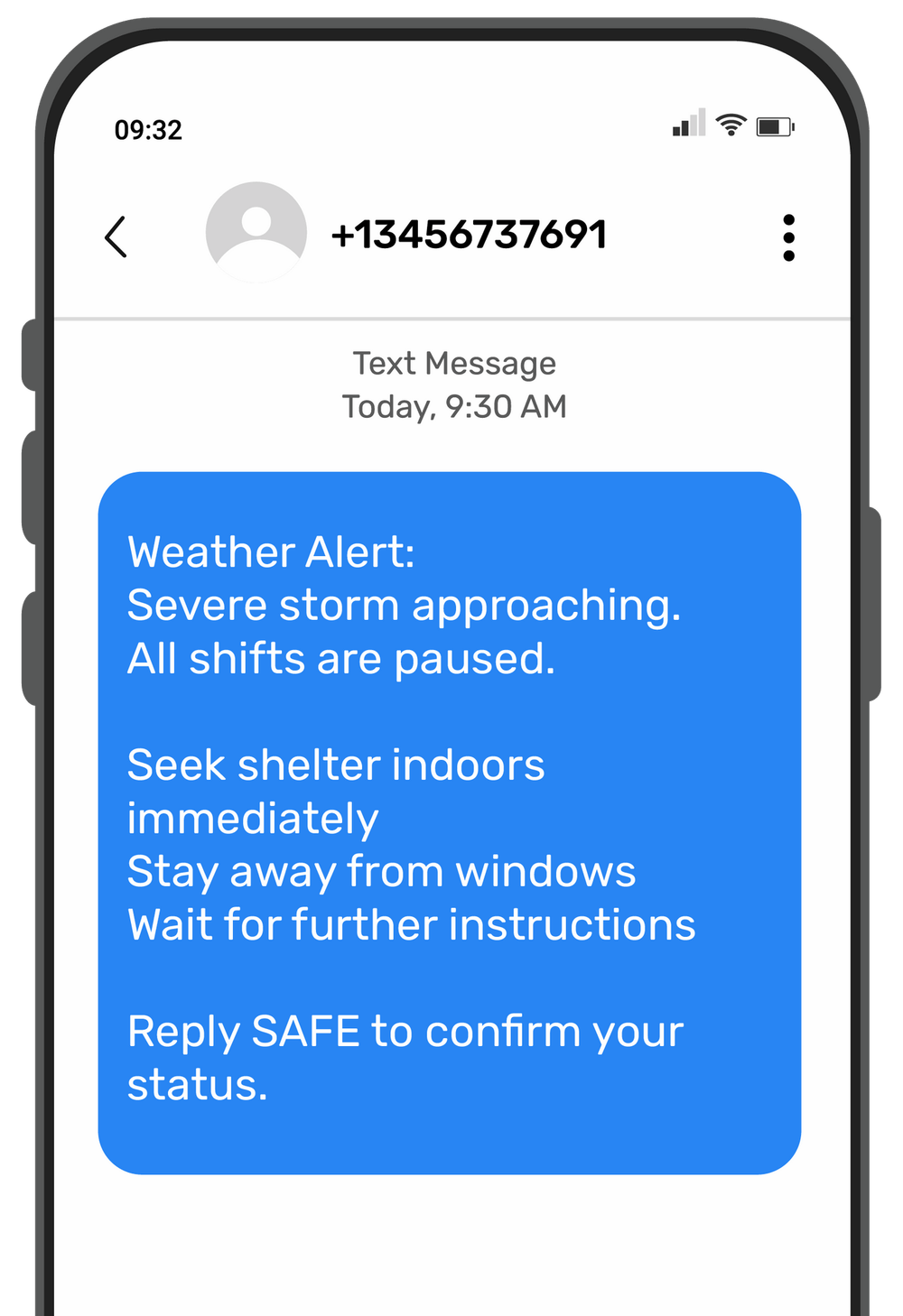
This helps support a safe and compliant work culture for the manufacturing companies.
4. Emergency notifications
Whether it’s a severe weather event, chemical exposure, fire, or security threat, emergencies demand instant action, and delays can significantly endanger lives.
|
SMS mass texting can help manufacturing businesses send:
|
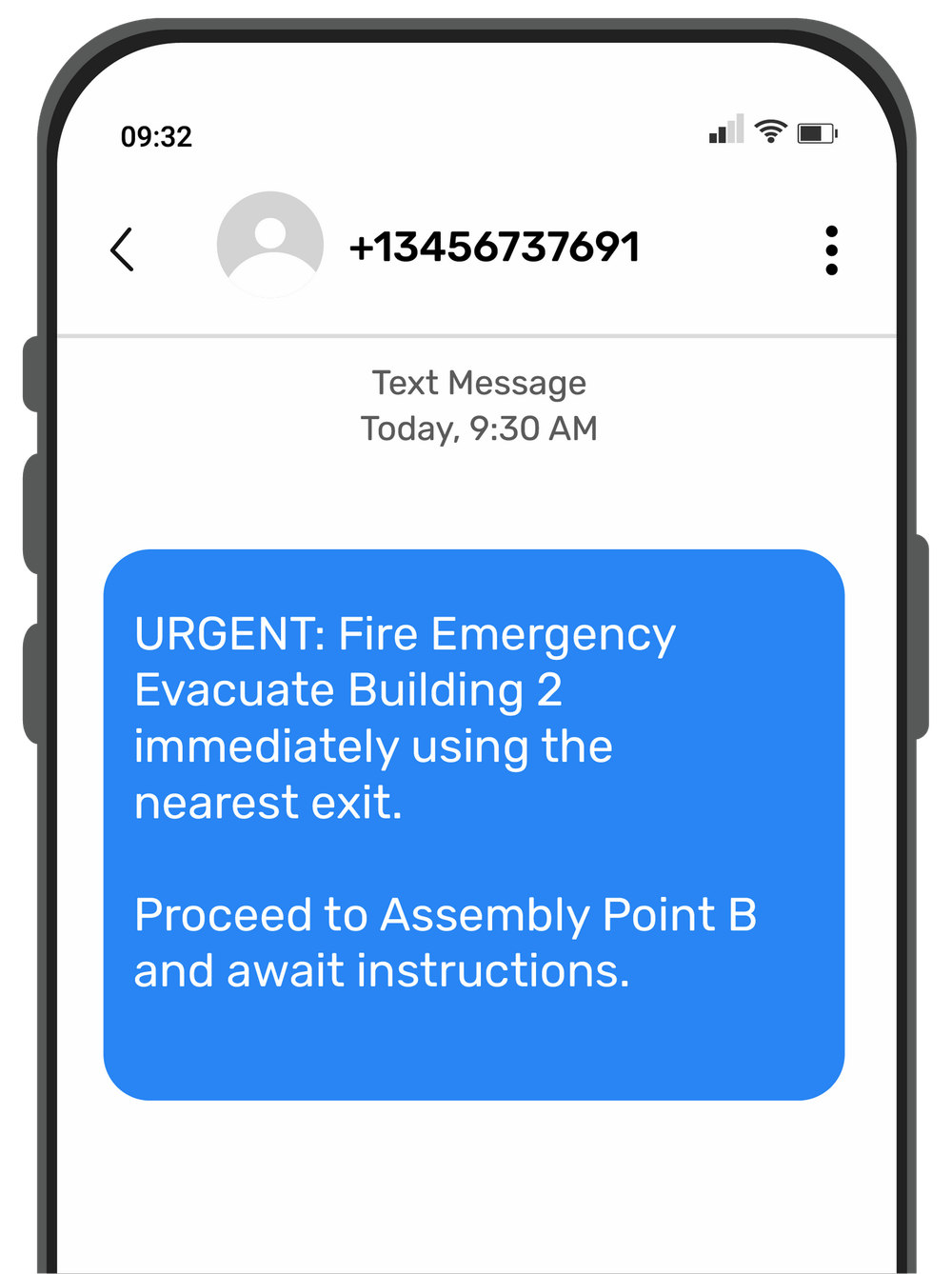
Since SMS doesn’t rely on internet connectivity, mass texting remains highly reliable even during infrastructure disruptions and for critical notifications.
5. Maintenance alerts
Preventive maintenance reduces unexpected disruptions and breakdowns, extends equipment lifespan, and ensures a streamlined operational flow. On the other hand, missed maintenance schedules can lead to costly consequences.
Mass texting supports maintenance by:
| |
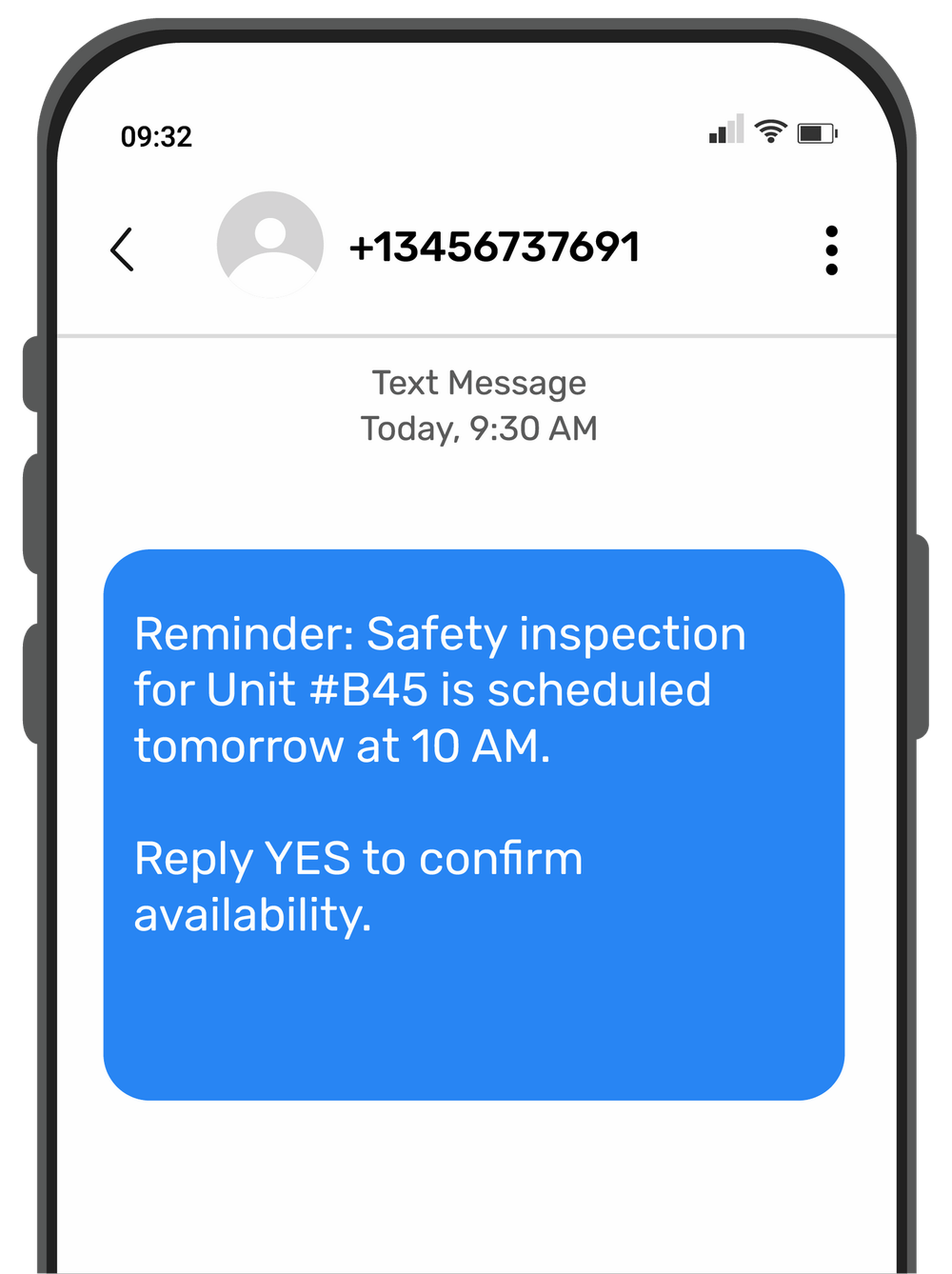
Automated maintenance alerts and reminders ensure critical maintenance activities are not overlooked.
6. Machine downtime alerts
Unplanned equipment failures directly impact production output and revenue. The faster maintenance teams are notified, the quicker issues can be solved.
|
Automated SMS alerts can:
|
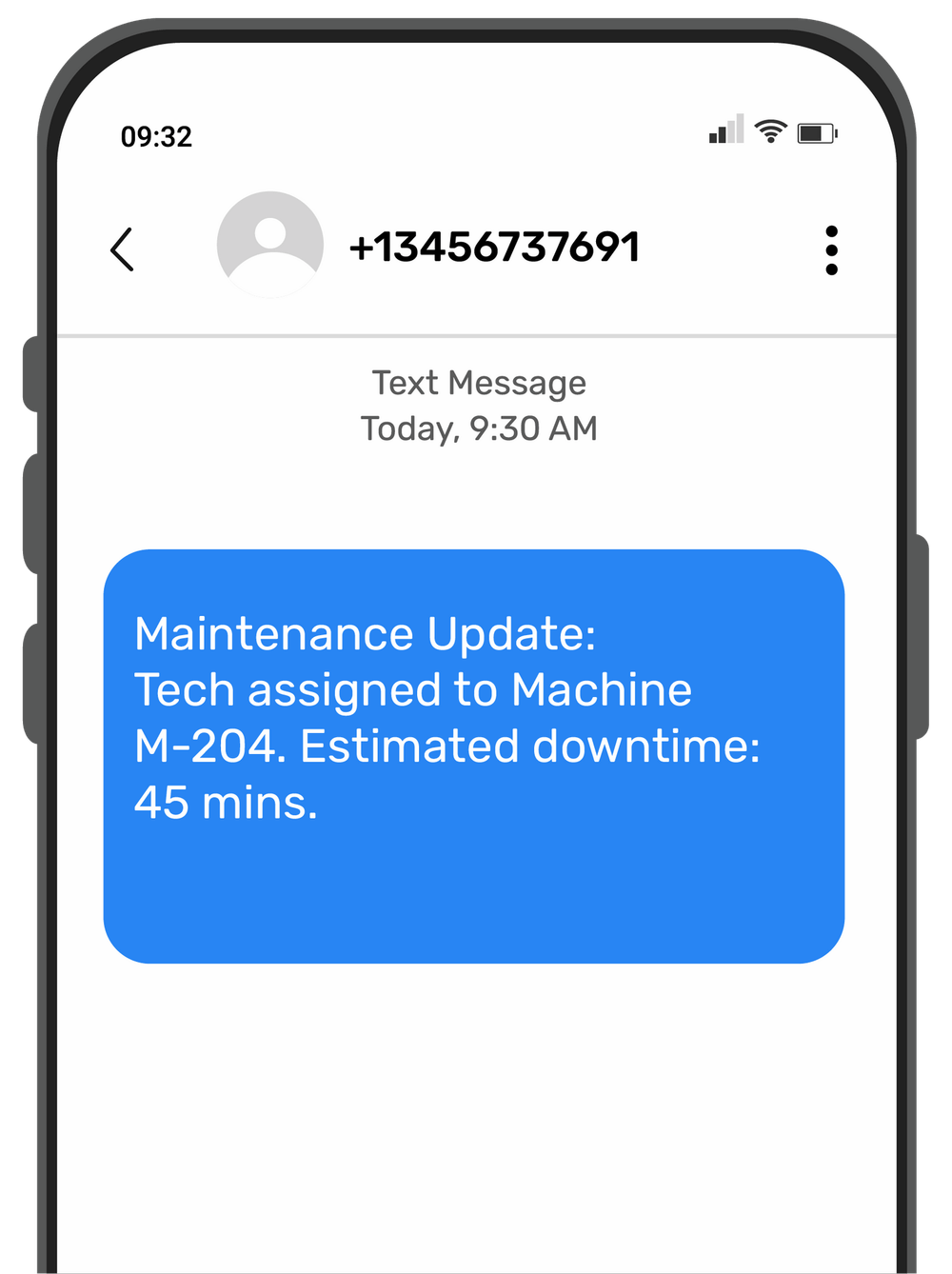
This significantly helps improve response speed, minimizes downtime, and protects delivery schedules.
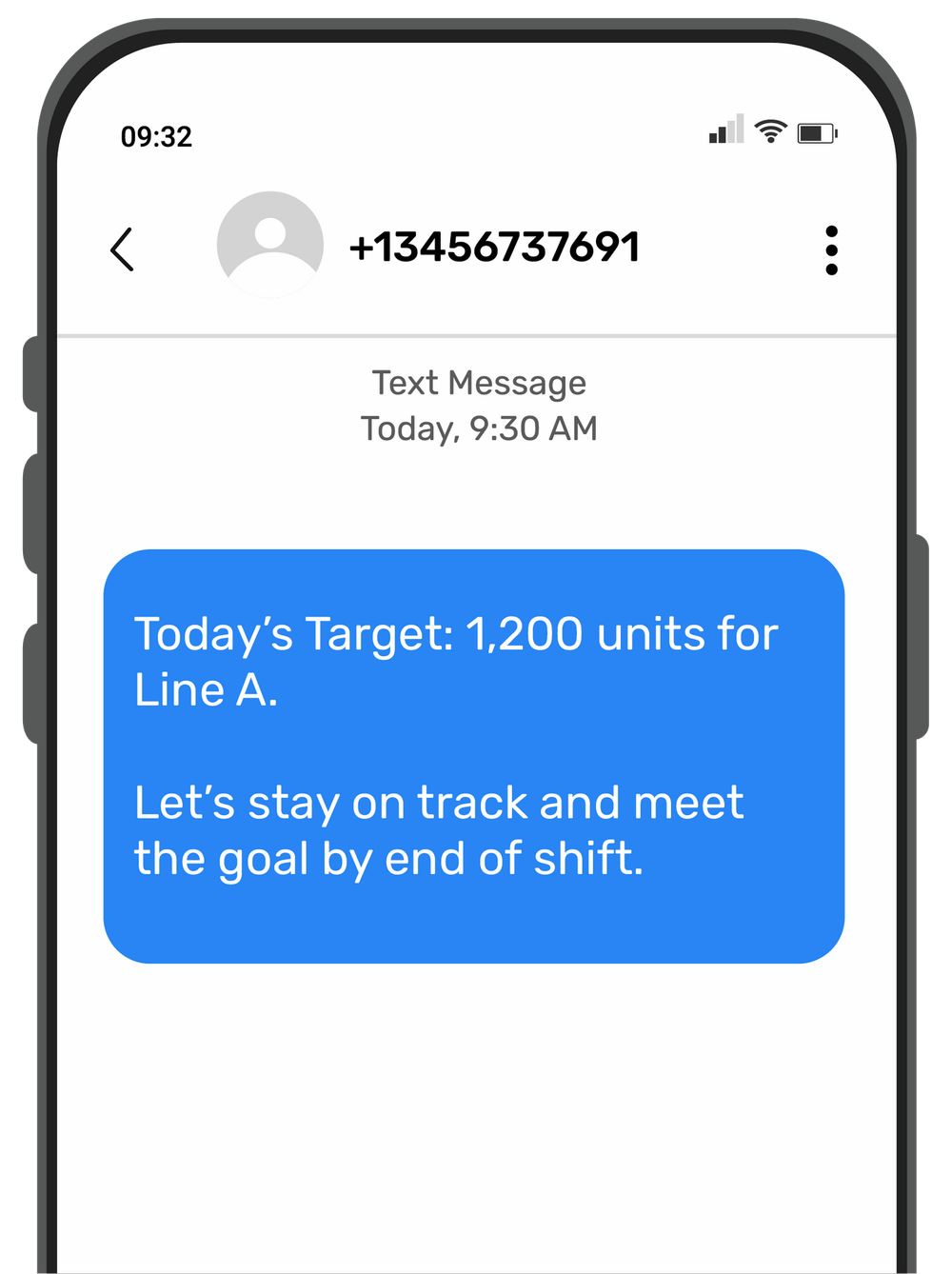
7. Production updates
Production targets can shift throughout the day, depending on priorities. It requires teams to stay aligned to meet delivery deadlines and output goals. Sending timely updates prevents workflow bottlenecks and maintains operational momentum.
SMS allows manufacturing companies to:
| |
8. HR announcements
Factory workers and employees often lack regular access to email and other traditional communication channels, such as printed notices and boards, making HR communication inconsistent. This can make important updates go unnoticed.
|
Mass texting allows manufacturing companies to:
|

9. Compliance reminders
The manufacturing industry is heavily regulated, especially in sectors such as pharmaceuticals, automotive, food processing, and chemicals. Failure to comply with compliance standards can result in forced shutdowns or penalties.
Mass texting reminders can help:
|
|
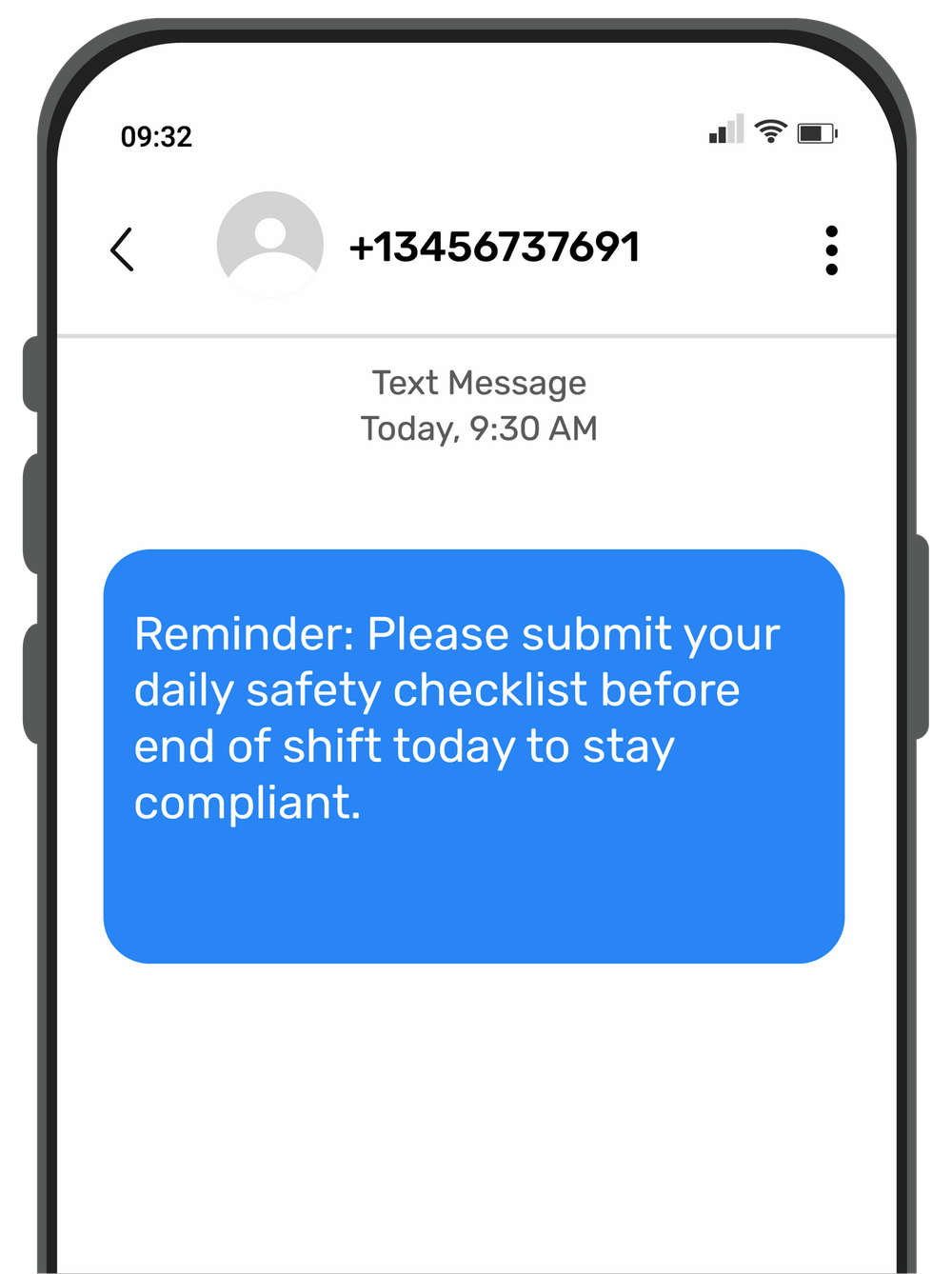
A documented communication trail also helps support audit releases.
10. Training reminders
Ongoing training is essential for safety compliance and operational excellence. However, without sending timely reminders, employees’ participation rates can suffer significantly.
| Mass texting improves training coordination, like:
|
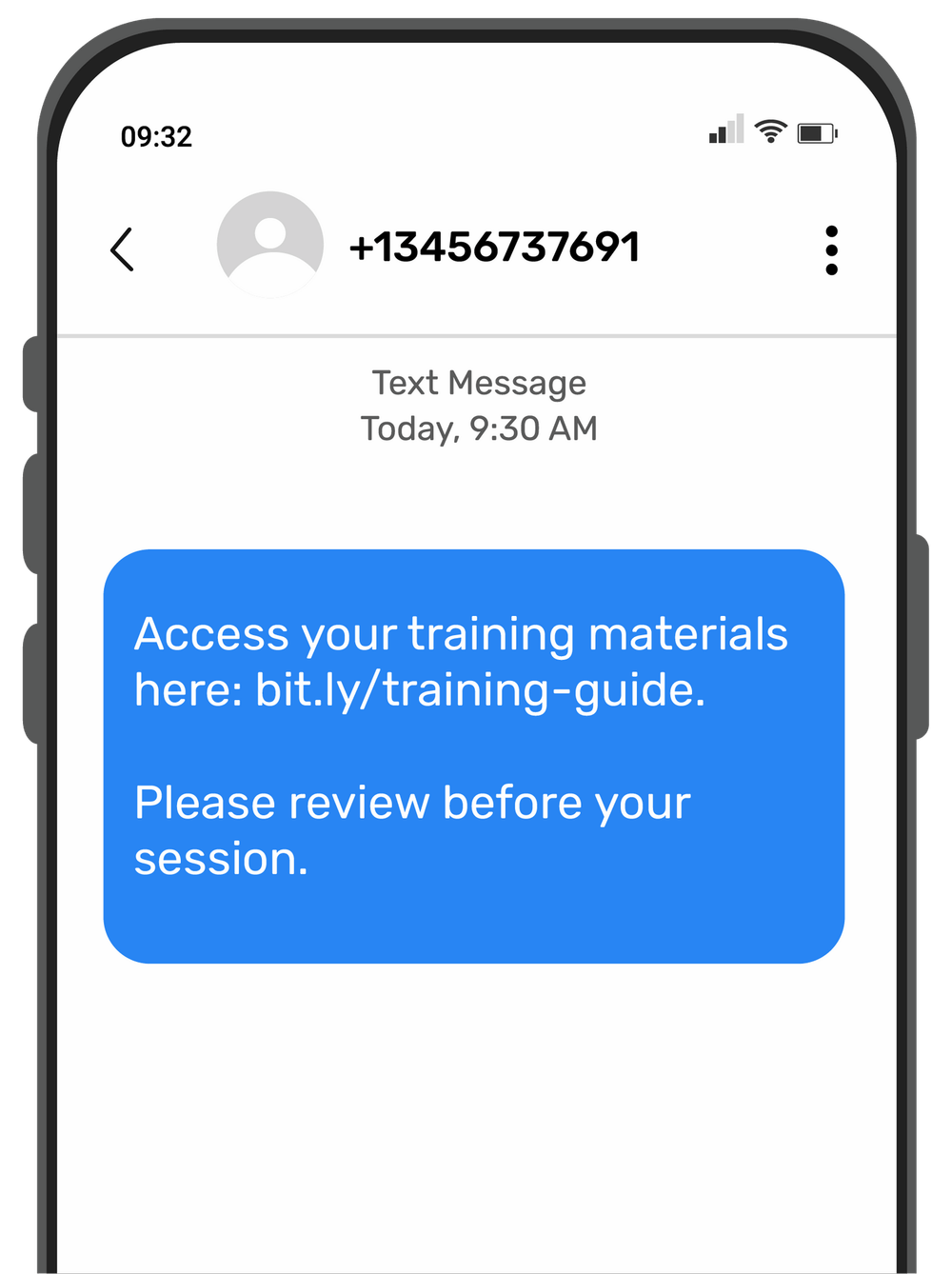
Mass texting helps increase participation rates and ensures the workforce remains skilled and compliant.
How Manufacturers Can Implement SMS Alerts
Depending on their use cases, infrastructure, and operational workflows, manufacturers can implement mass text alerts in several ways.
1. SMS API Integration for Advanced IT Infrastructure
If your manufacturing company has a strong IT infrastructure and the ability to send web-based or digital broadcast texts, you can easily integrate SMS alerts with your existing SaaS tools and enterprise systems, such as:
- ERP systems
- SaaS platforms
- IOT devices
- BAS and HMI Systems
- Manufacturing Execution Systems (MES)
- Inventory management platforms
- Workforce management systems
Using the SMS API, alerts can be automatically triggered based on system events or data changes. For example, machine downtime, production updates, or inventory alerts can instantly notify the relevant teams.
TXTImpact provides a Unified Messaging Gateway API that enables businesses to send and receive text messages with hundreds of employees or users worldwide, allowing real-time operational communication.
2. Email-to-Text Gateway for Legacy Systems
If you are looking for a no-code integration, especially for legacy systems that do not support modern APIs or third-party applications, or for SaaS companies that prefer not to rewrite existing software, an email-to-text gateway is a practical solution.
Using standard email protocols such as SMTP (Simple Mail Transfer Protocol), email-to-text services allow companies to send bulk texts and notifications directly from their emails. This makes it easier to deliver instant, time-sensitive alerts without complex integrations or additional development.
3. Web-Based SMS Broadcasting for Small Manufacturers
For small and medium-sized manufacturers that do not rely on large IT infrastructures and operate with simpler systems, a web-based broadcasting tool is often the easiest solution.
Using TXTImpact OmniHub, businesses can send mass notifications or alerts directly from a web application. This allows companies to quickly communicate with employees while also enabling two-way messaging when needed.
💡 Also Read: How to send Mass text Messages using Texting Service? |
4. Workflow Automation for SMS Alerts
Manufacturers can also automate their entire alert system using automated workflows.
With TXTImpact Workflows, businesses can set up trigger-based notifications, event-driven alerts, and conditional logic to automatically send messages when specific conditions are met. This helps streamline communication and reduces manual effort in managing operational alerts.
5.Multi-Channel Messaging for Better Reach
Beyond bulk SMS, manufacturers can also expand their communication capabilities by using additional messaging channels, such as:
These channels allow companies to send rich media messages, interactive notifications, and enhanced communications to their workforce, improving engagement, message visibility, and overall reach.
Best Practices for Implementing Mass Texting in Manufacturing
Following strategic, well-approved best practices ensures that factory floor communication remains effective, scalable, and aligned with operational goals. Here is the list of best practices you must follow to ensure successful mass texting campaigns on the factory floor.
- Define clear usage policies: Decide who can send and what qualifies as an SMS alert.
- Keep messages short and actionable by using clear instructions and simple language.
- Segment your workforce by categories such as shift, role, department, and location.
- Send SMS alerts at appropriate times to avoid disrupting peak production hours with non-urgent messages.
- Clearly classify message urgency to separate critical and urgent notifications from routine updates.
- Obtain proper consent by collecting opt-ins and providing clear opt-out instructions to stay compliant.
- Use two-way messaging strategically by enabling replies for safety acknowledgments, polls, and shift confirmations.
- Automate alerts and routine updates by integrating SMS with ERP, HR, or machine monitoring systems to push real-time triggers.
- Avoid message fatigue and reserve SMS for highly crucial, important, and time-sensitive communication.
- Monitor performance metrics by tracking delivery rates, response rates, and operational impact. Effectively train managers and supervisors to ensure they understand sending protocols and escalation procedures.
Why Choose TXTImpact For Factory Floor Text Messaging?
TXTImpact delivers a reliable, value-for-money mass texting solution for businesses in multiple sectors, including manufacturing.
It offers cutting-edge features that efficiently meet your company’s scalable business messaging needs and ensure streamlined operational efficiency.
Some of these extensive features include scheduling broadcast messages, easily importing mobile numbers, filtering numbers, forwarding replies, creating unlimited groups, creating subscriber segments, personalization with merge tags, automatic opt-out, social media integration, real-time reports, and much more.
Besides these features, TXTImpact has recently added new capabilities designed for smarter mass texting to meet today’s operational demands. These include:
- AI Assist for instant SMS creation: AI Assist makes message creation a breeze. You simply have to describe the context of your message, and the tool generates relevant SMS content in your preferred tone and language. This helps save time and boost productivity.
- Multilingual messaging with Unicode: With TXTImpact, you can send messages in multiple languages and support diverse cultures, highly beneficial when your manufacturing company has workers from different backgrounds and regions who understand different languages.
- Built-in 10DLC and campaign registration: With built-in 10DLC brand and campaign registration, businesses can meet carrier requirements, Fast Registration process, and improve message delivery without extra steps.
Additionally, TXTImpact offers automatic, easy opt-out and a streamlined registration process, helping businesses stay compliant with regulations.
Conclusion
Traditional communication cannot feasibly reach all workers, especially at the right times. When critical updates and announcements are not conveyed and reached on time, it leads to production disruptions and losses.
Mass texting solves this challenge by reaching frontline and non-desk workers right where they are, ensuring quick, reliable communication.
If your manufacturing company is facing a similar issue and needs a suitable communication solution, choose TXTImpact’s mass texting service. It offers seamless integrations, an intuitive dashboard, easy number import, high security and scalability, and many more reliable features at the best value for money.
So, contact us to get started or start a free trial to explore the platform yourself.
FAQs
♦ Is SMS reliable in areas with weak internet connectivity?
Yes, SMS operates on mobile carrier networks and doesn’t depend on or require Wi-Fi or internet connectivity, enabling instant reach and high deliverability.
♦ Can supervisors respond to SMS replies in real time?
Yes, with two-way messaging, managers and supervisors can easily view, track, and respond to employee messages from a centralized dashboard.
♦ Can you automate SMS alerts based on machine or system triggers?
Definitely, you can easily integrate TXTImpact’s SMS APIs with your monitoring systems to automatically send alerts and notifications when predefined conditions are met.
♦ How can SMS alerts reduce downtime for manufacturing companies?
Automated SMS alerts significantly reduce downtime with their quick, instant reach, accelerating the handling of critical issues and decision-making. Real-time notifications and faster response times reduce resolution time by over 50%, preventing issues such as machine failure, stockouts, or disrupted production lines.
♦ Is mass texting suitable for small manufacturing businesses as well?
Absolutely. TXTImpact provides a highly scalable and cost-effective mass texting solution, making it suitable for both small manufacturing plants and large multi-facility operations.
About the Author:
 | Rahul Kumar (Marketing Specialist) Rahul Kumar is a Digital marketer with 7+ years of experience in SEO, AEO,SMS marketing, WhatsApp marketing, SaaS, and WordPress. He has led successful growth campaigns for startups and tech brands, combining data-driven strategies with compelling content. His work has been featured on top SaaS blogs, and he’s known for turning complex ideas into high-converting digital strategies. |