12+ RCS Messaging Examples, Industry Use Cases, and Real-World Case Studies
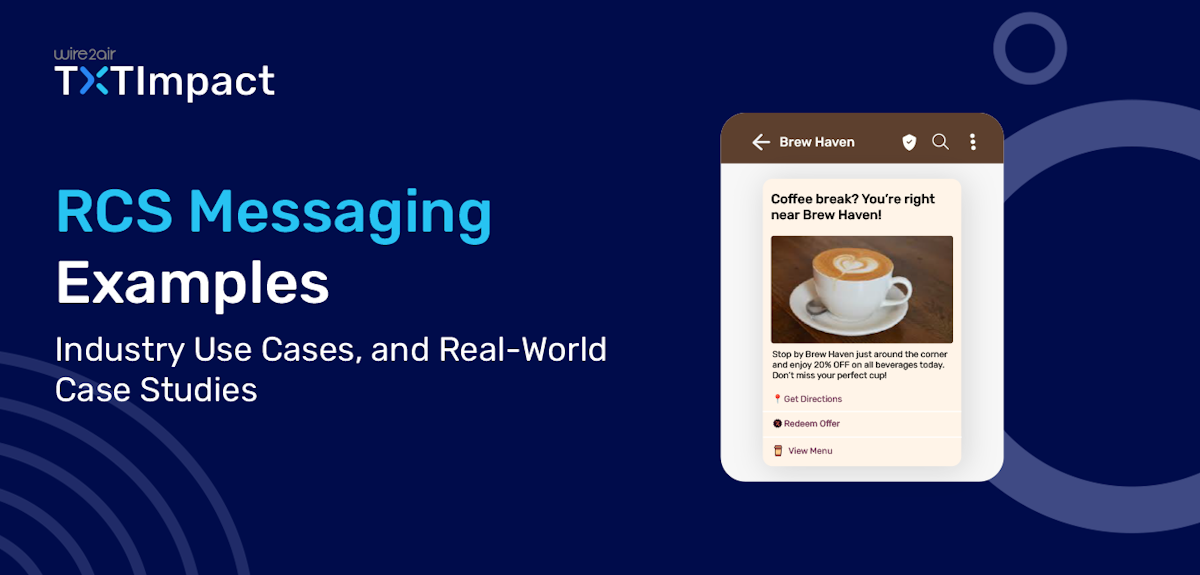
SMS marketing, once a breakthrough in the marketing industry in the early 2000s, when business is gradually diminishing from the spotlight with the introduction of Rich Communication Services (RCS).
RCS combines SMS reach with app-like features, including interactive elements such as buttons, carousels, images, and audio files. Its adoption has been growing rapidly ever since Apple rolled out iOS 18 support for RCS, with one billion RCS messages sent every day in the U.S.
This blog explores some of the most popular business use cases of RCS with real-life examples and case studies. Let’s get right into it!
Jump to: |
A Quick Intro to RCS Messaging
RCS is an advanced communication solution that enhances SMS or MMS messaging by incorporating interactive and rich media elements, such as images, videos, audio, carousels, quick reply buttons, and suggested replies, while ensuring end-to-end encryption.
Several RCS providers, such as TXTImpact, offer RCS messaging services that integrate with major carriers in the U.S. When both the sender’s (business’s) and the receiver’s (customer’s) devices and carriers support RCS, the RCS message is delivered properly to the customer; otherwise, it falls back to SMS.
💡 Also Read: RCS vs SMS: Why You Should Make the Switch Today? |
Why Should Your Business Adopt RCS?
Because RCS is no longer a concept of the future, but a matter of now, it’s the reality! Here are a few reasons why your business should adopt the RCS messaging service:
Compared to email, RCS messages have a 35-fold higher chance of being read, thanks to a verified business profile and branded communication, which boosts customer trust and open rates.
With customers engaging with RCS content for up to 45 seconds and 90% rich media messages getting opened by customers within 15 minutes of sending them, RCS significantly improves engagement rates. Source: (MEFTV channel : RCS World 2023)
The interactive rich-media RCS features, such as carousels, buttons, quick replies, images, and videos, drive higher CTR compared to SMS, resulting in increased customer engagement.
RCS supports in-depth monitoring and messaging tracking, enabling you to track message delivery and engagement metrics, including read receipts, open rates, and conversion rates.
Want a personalized RCS strategy for your business? Contact us today
Besides these features and benefits of RCS for your business, RCS also enhances the customer experience, which we will discuss in more detail.
RCS Messaging Features That Enhance Customer Experience
RCS significantly improves customer engagement by building trust and delivering valuable messages that facilitate customer experience. Here are RCS messaging features that help businesses achieve this:
App-like experiences: RCS eliminates the need for customers to download any additional messaging app or software, providing an app-like experience within their default messaging applications, thereby reducing friction and increasing adoption.
Personalization: With 71% of customers expecting businesses to deliver personalized interactions, RCS enables businesses to send targeted and customized messages, meeting customer expectations.
24/7 customer support: RCS facilitates customer experience, enabling customers to find information, such as store opening times, manage their profiles, and request service updates, all within their default messaging app.
Feedback requests: Tailored feedback forms, surveys, and polls enable customers to express their thoughts about your services, making them feel valued and providing valuable insights into customer experiences.
12+ RCS Examples and Use Cases For Efficient Marketing
Here are some RCS marketing examples to boost your business’s marketing efforts:
1. Marketing campaigns
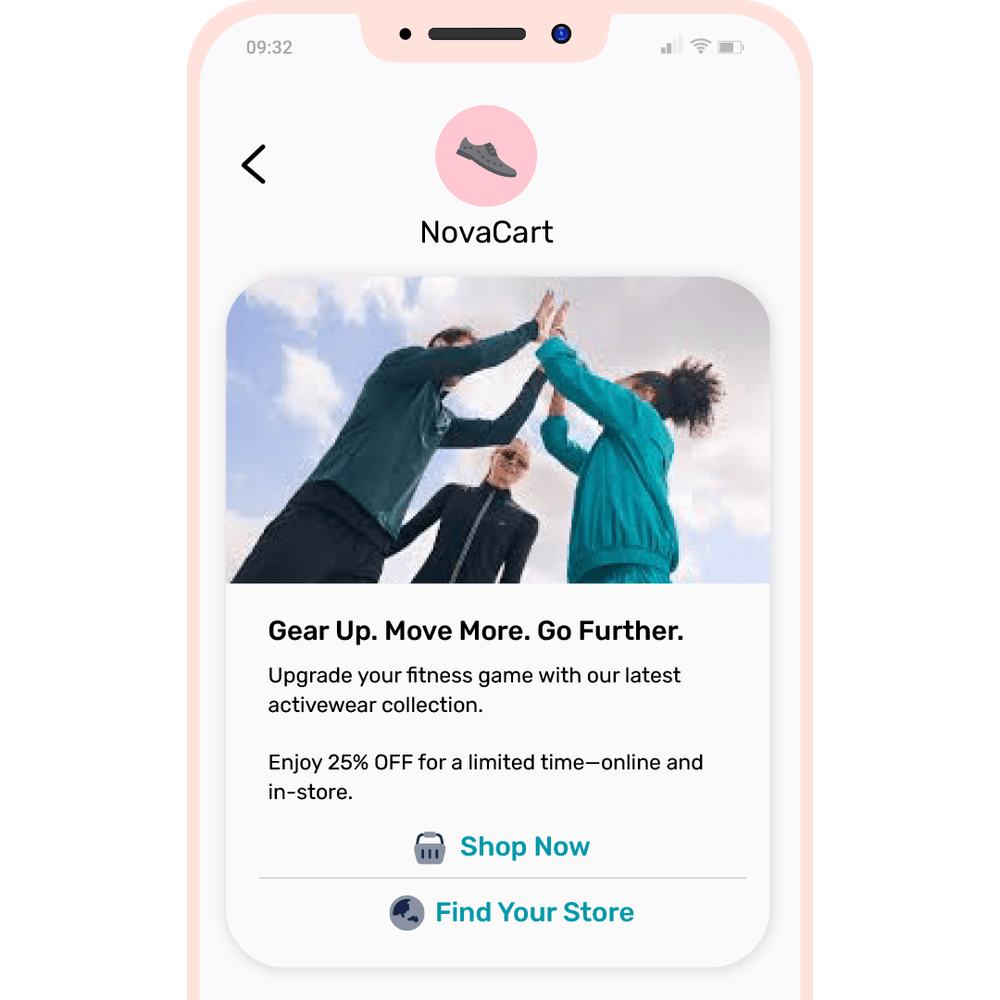
RCS elevates messaging campaigns with rich media promotions, branded messaging, interactive carousels, quick reply buttons, and personalization, offering interactive and visually appealing messages.
A few marketing business use cases of RCS examples would be
- Product launches
- Event invitations
- Seasonal sales and promotions
- Loyalty programs
- Gamified campaigns
- Flash sales
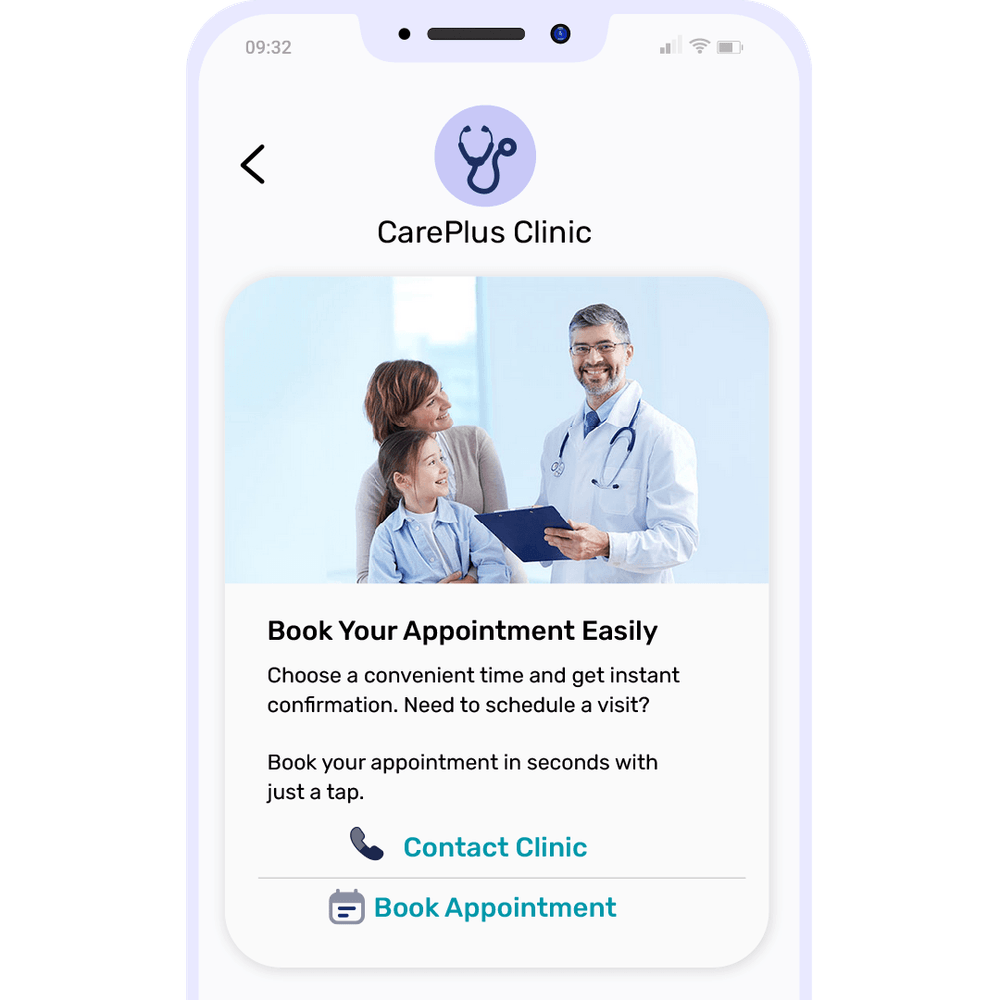
2. Appointment booking and reminders automation
Right from scheduling appointments to rescheduling, RCS allows you to automate the entire appointment workflow, without the need to juggle multiple phone calls, one-way messages, or emails.
Businesses can streamline appointment booking and scheduling with features like rich carousels to select time slots and clickable buttons to book or modify appointments. The workflow can also include real-time confirmations, automated reminders, and integrated payment options to facilitate the customer experience.
Thus, unlike plain SMS alerts, RCS appointment booking and reminders make the process streamlined for customers with interactive elements. It ensures reduced no-shows, higher operational efficiency, and improved brand trust and credibility.
3. Product catalog
Using the RCS carousel feature for a product catalog allows businesses to turn the message conversation into a mini storefront. Businesses can feature product visuals, descriptions, pricing, and quick reply buttons for purchasing products, streamlining the checkout process for customers.
Besides, you can send curated, personalized product catalogs to the customers based on their location or purchasing behavior. This feature, which showcases multiple product images in a single message with an option to buy, significantly improves the customer experience and engagement, leading to higher conversion rates. 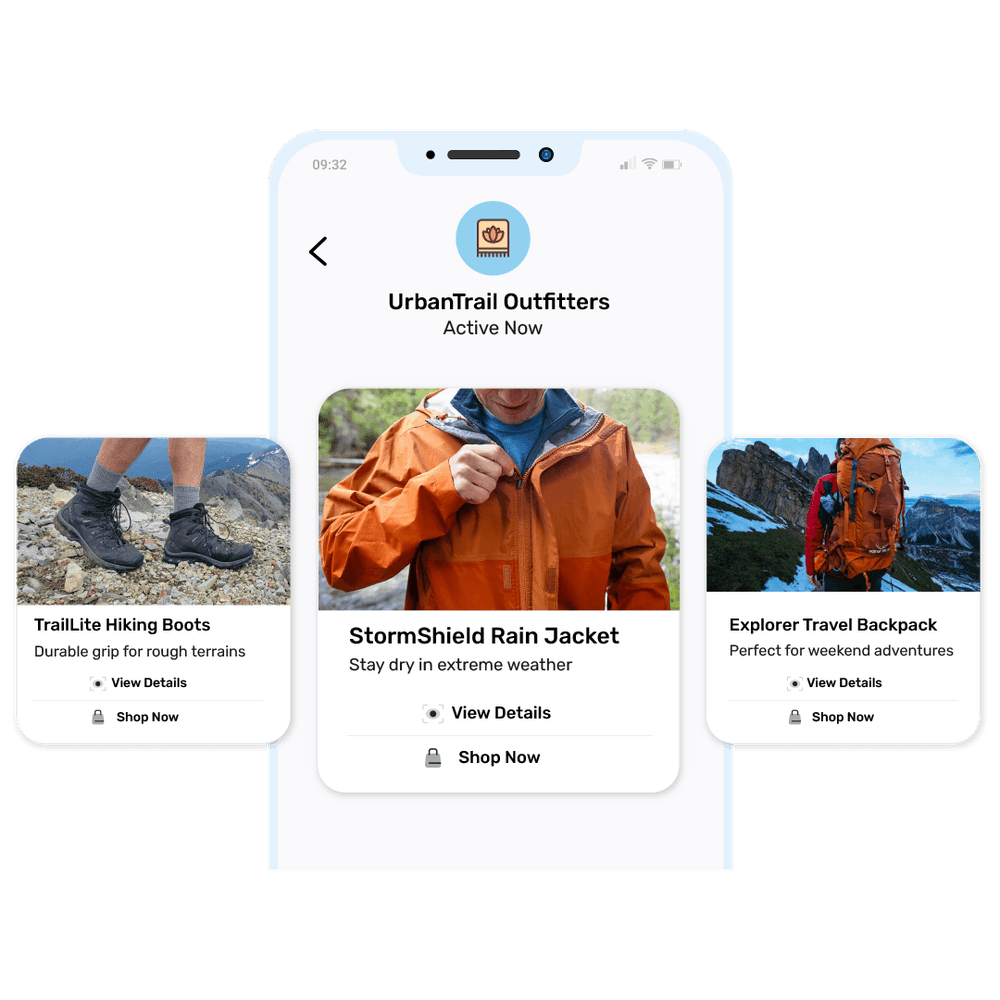
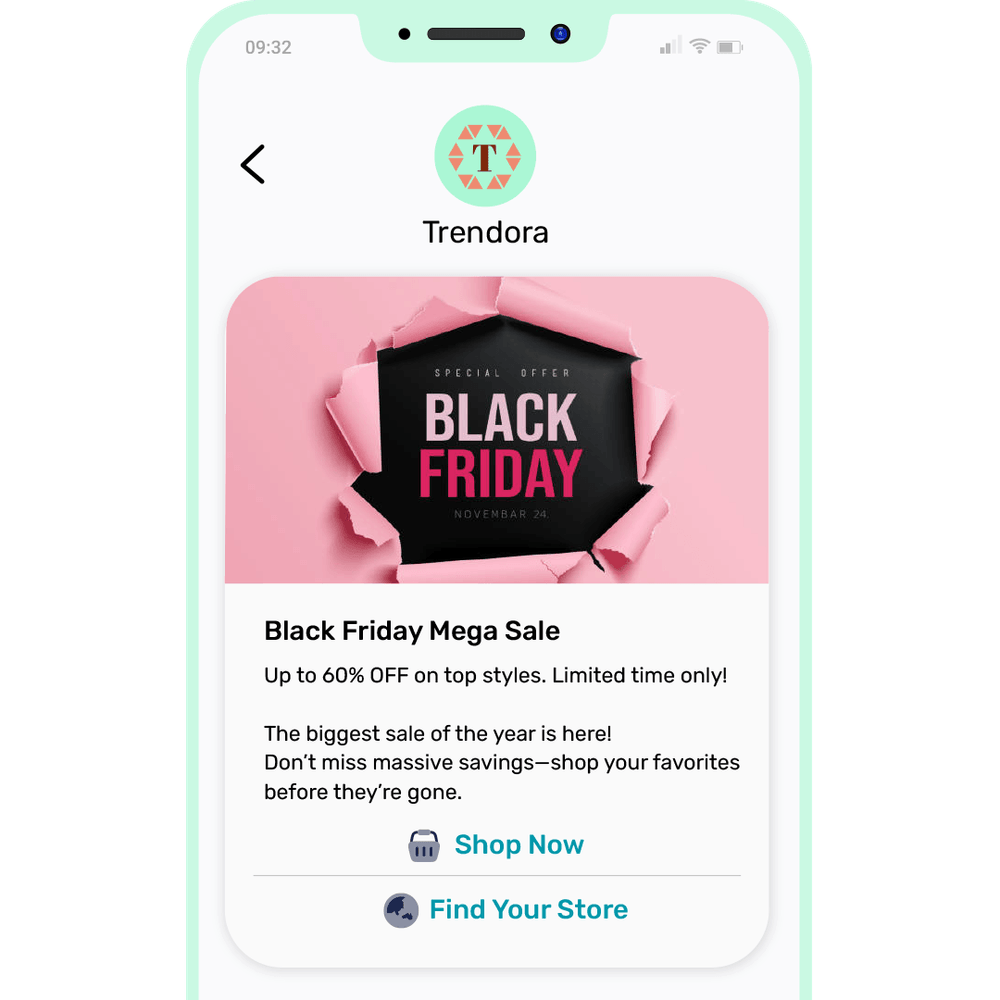
4. Black Friday campaigns
In 2024, mobile devices facilitated 55% of Black Friday online sales, signifying the importance of mobile devices for online sales.
Businesses can capitalize on this season and the opportunity to send interactive and eye-catching promotional messages to customers, increasing sales and conversions.
5. Order status and confirmation
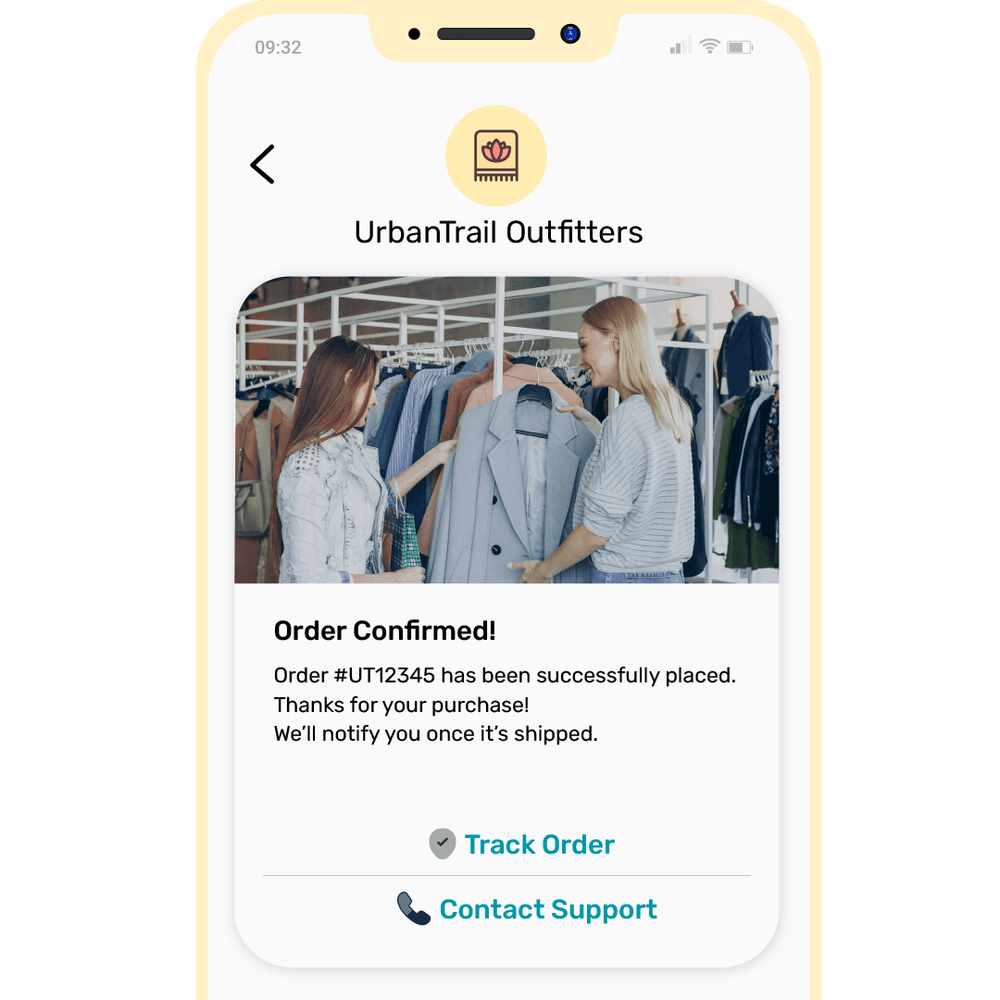
64% of customers prefer receiving order confirmation messages on their mobile devices. While SMS does the job, RCS enables businesses to keep customers informed about their order status with visual product images, pricing, sizing, and other relevant details.
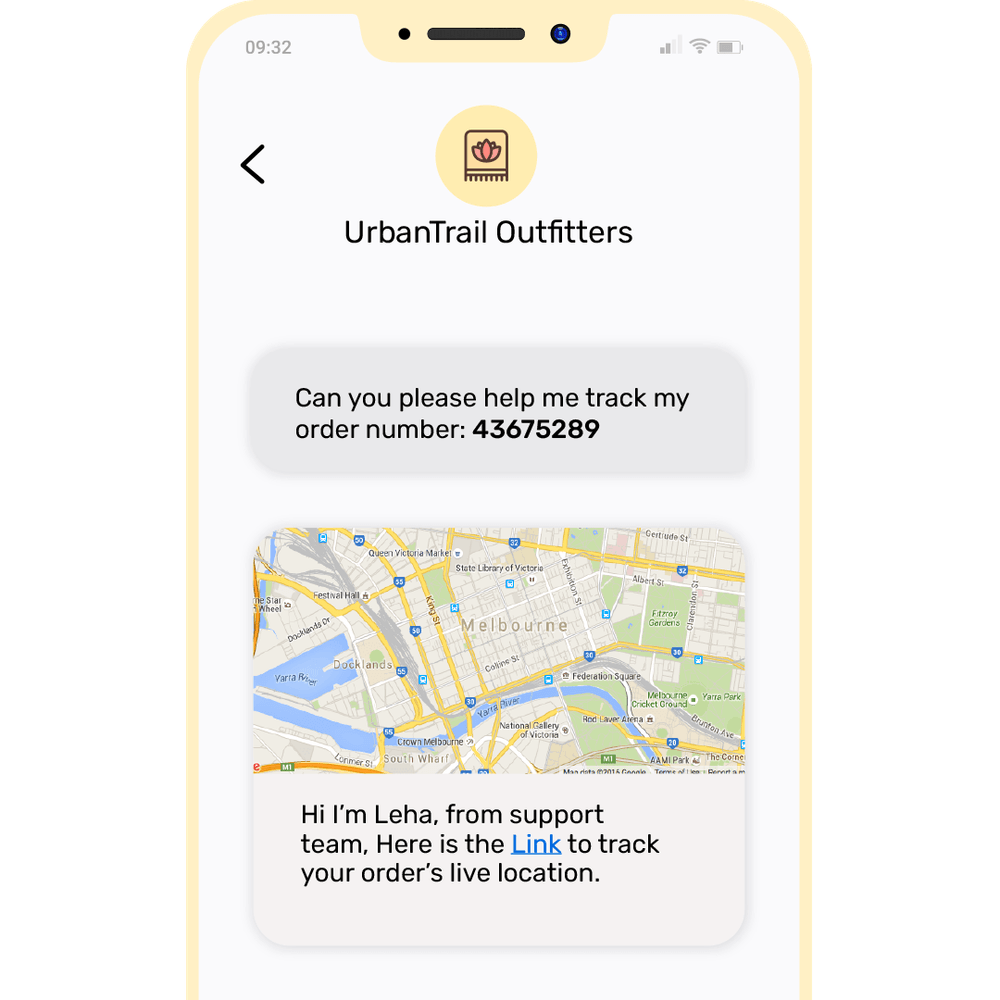
Customers can also easily track their order progress and estimate when they can expect it. You can also send a map to enable customers to track their orders with ease.
Secure RCS providers, like TXTImpact, provide reliable RCS gateway API support that facilitates e-commerce companies to integrate RCS into their existing workflows, delivering engaging experiences and ensuring high open rates.
6. One-Time Passwords (OTPs)
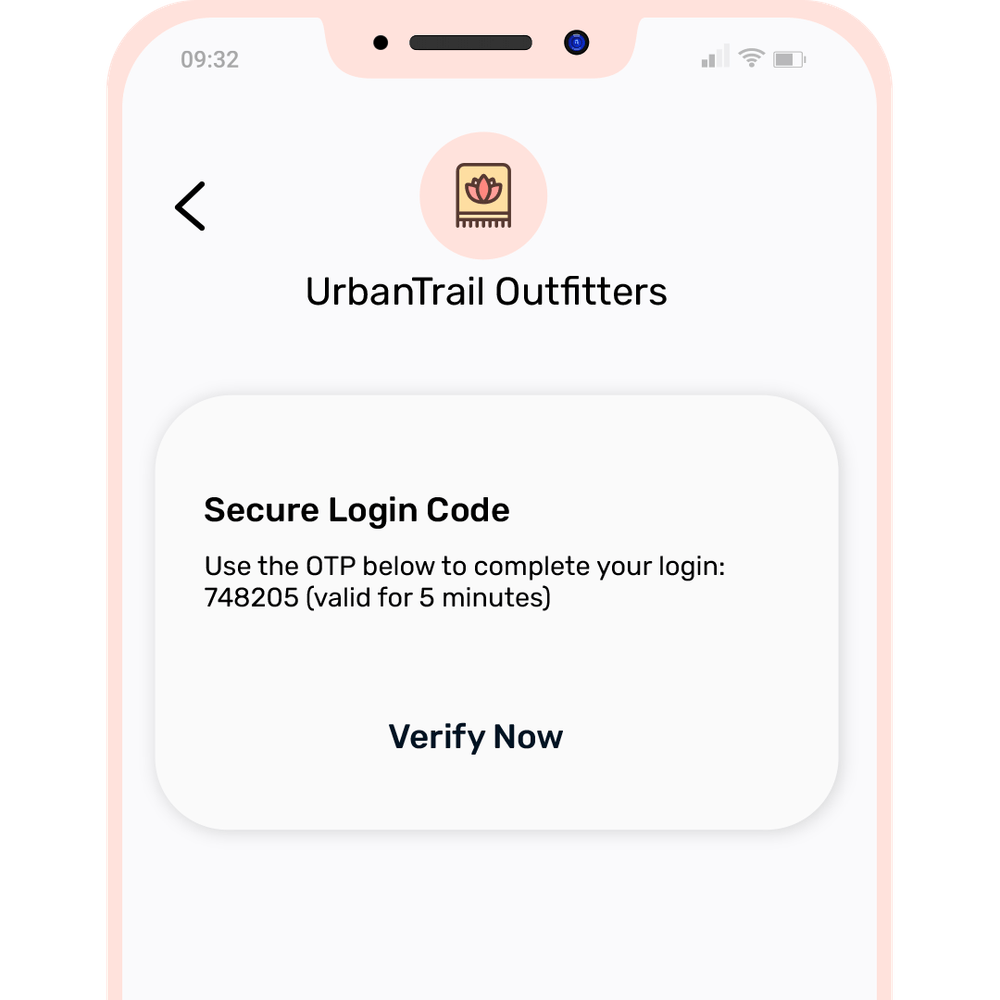
OTPs, when sent through RCS, significantly enhance security and user experience for customers. Security matters when it comes to user verification, especially when data shows that as high as 60% of companies’ OTP requests could be fraudulent.
RCS ensures OTPs are sent from a branded and verified business profile, immediately establishing trust amongst customers and reducing the risk of customers falling victim to phishing scams, ensuring a secure and user-friendly authentication process.
💡 Also Read: How to receive 2FA OTP via Email? |
7. Location sharing
RCS allows you to embed interactive maps and live location details, ensuring a hassle-free and intuitive customer experience.
With features like live location pins, embedded maps, and one-tap directions, businesses can guide customers to their stores, ask customers for their live locations, or help customers track a delivery order.
Several restaurants, retail businesses, transportation services, and service providers can use RCS for location sharing to provide a seamless customer experience.
7. Gather customer feedback
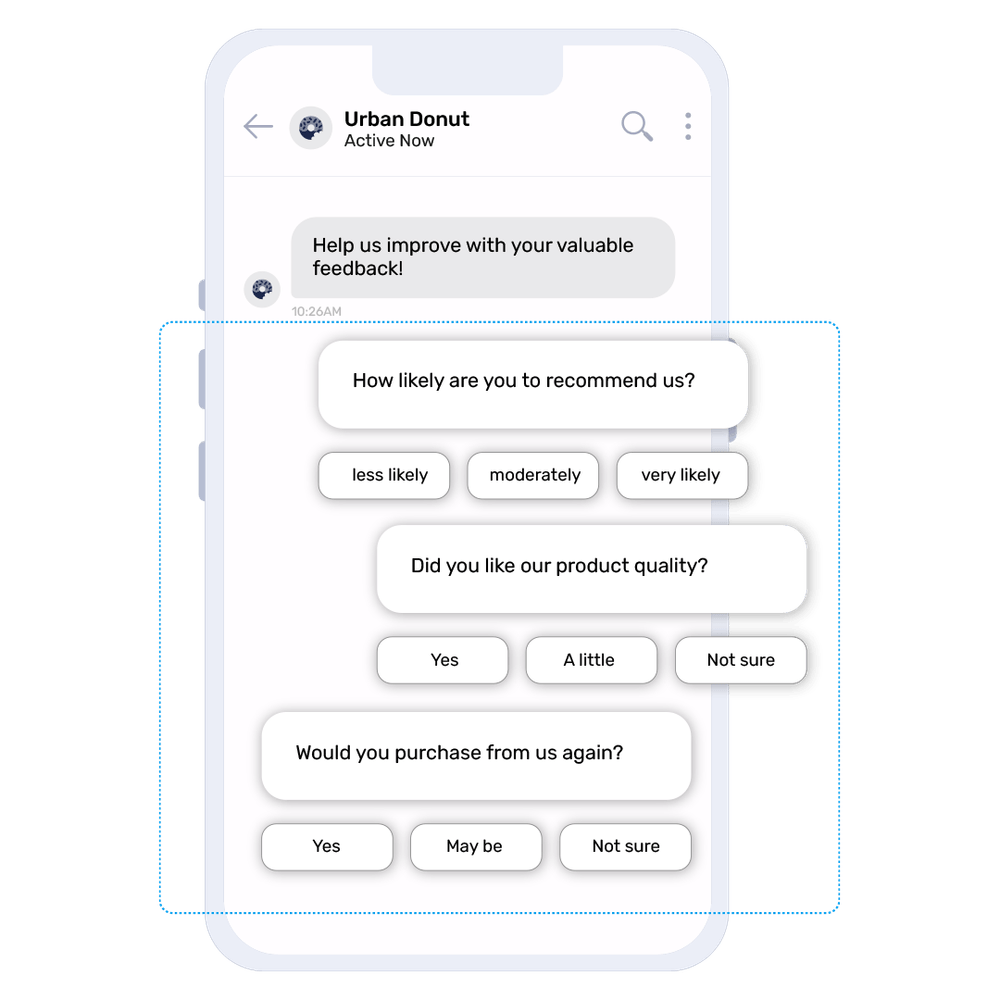
Compared to a plain feedback form or survey, RCS allows you to conduct customer feedback in a more conversational manner. Traditional SMS or email surveys often receive low response rates compared to RCS, which allows you to include interactive features and automation.
For instance, here are some ways you can incorporate RCS into customer feedback:
- In-message surveys: Instead of a Google form or a survey link, you can send a series of questions with tappable button replies, quick replies, or rich cards in the RCS message.
- Dynamic flows: This includes triggering follow-up questions in real-time after user responses, ensuring a personalized user experience.
- Visual question types: Incorporating emojis, star ratings, and multiple-choice options in the surveys boosts engagement and user experience.
TXTImpact’s RCS survey and polling tool makes it easier for businesses to collect customer feedback through rich cards and features like quick replies and suggested replies, thereby delivering a seamless customer experience.
It enables customers to have an effortless feedback experience, improving response rates and the quality and honesty of their feedback responses.
9. Customer newsletters
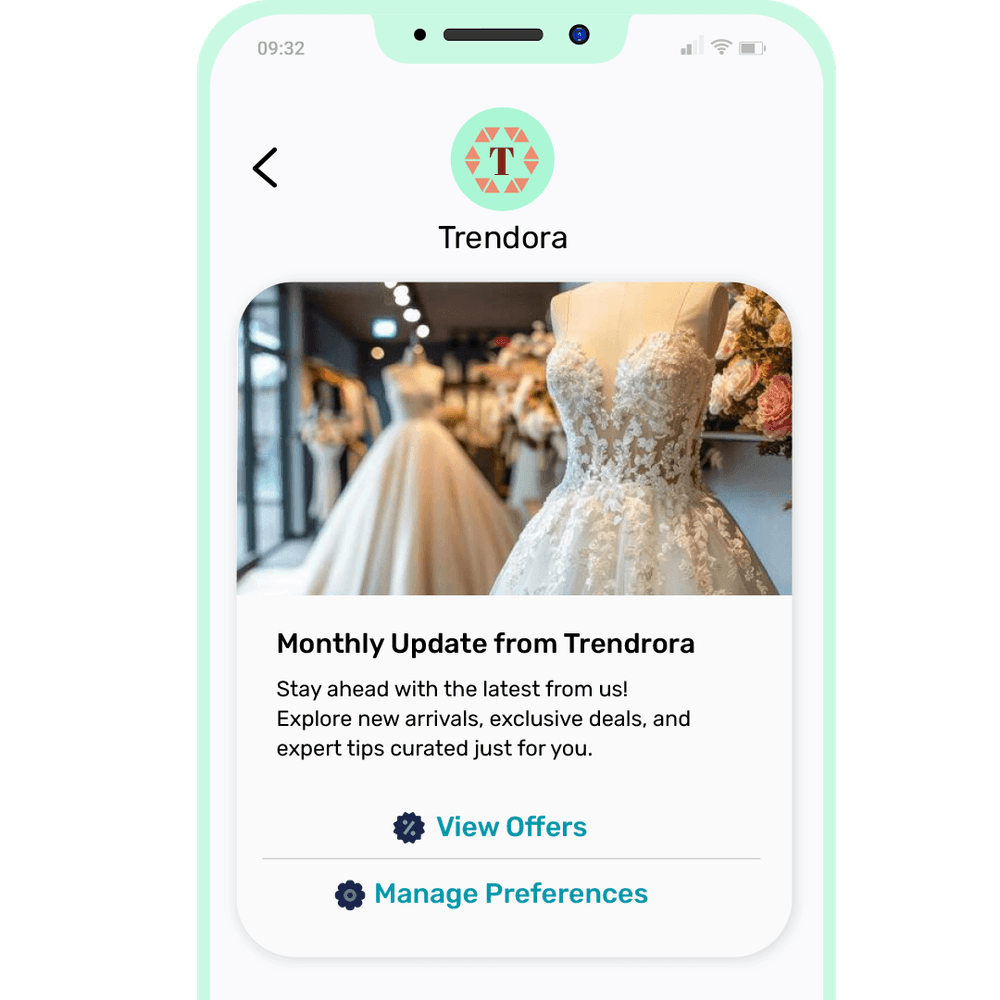
RCS upgrades your email marketing campaigns and strategy by replacing plain, text-heavy email newsletters with interactive, media-rich newsletters, directly to your customers’ phones.
With RCS newsletters directly delivered to customers’ messaging apps, they ensure instant reach and visibility, eliminating inbox clutter and spam emails, and promoting higher engagement.
10. Critical notifications
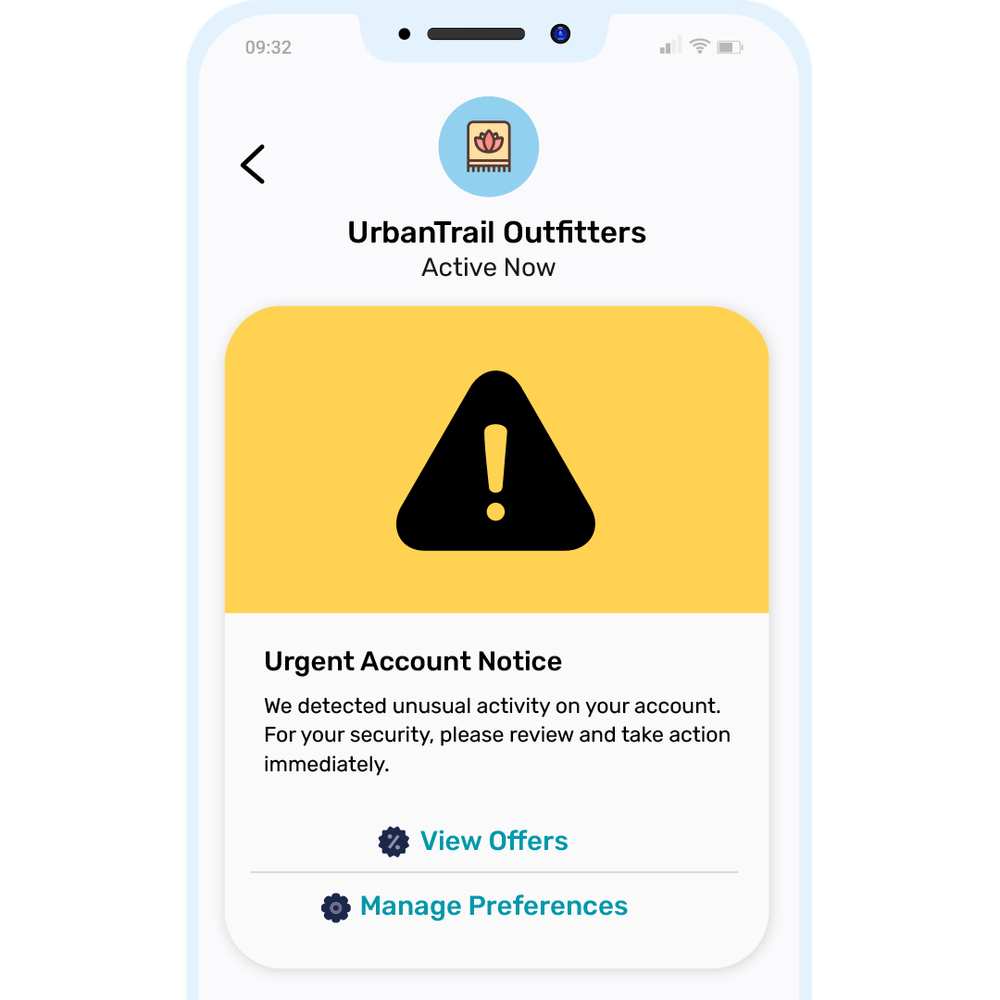
Whether it’s a bank sending real-time fraud alerts and notifications with ‘Accept / Block transactions’ buttons or an airline company sending flight delay or cancellation messages with options to issue a refund or rebook another flight, RCS makes sending critical notifications a breeze.
The verified sender’s profiles allow recipients to instantly trust and recognize the authenticity of the message, which is especially crucial when sharing time-sensitive and high-priority messages.
11. Bills and invoices
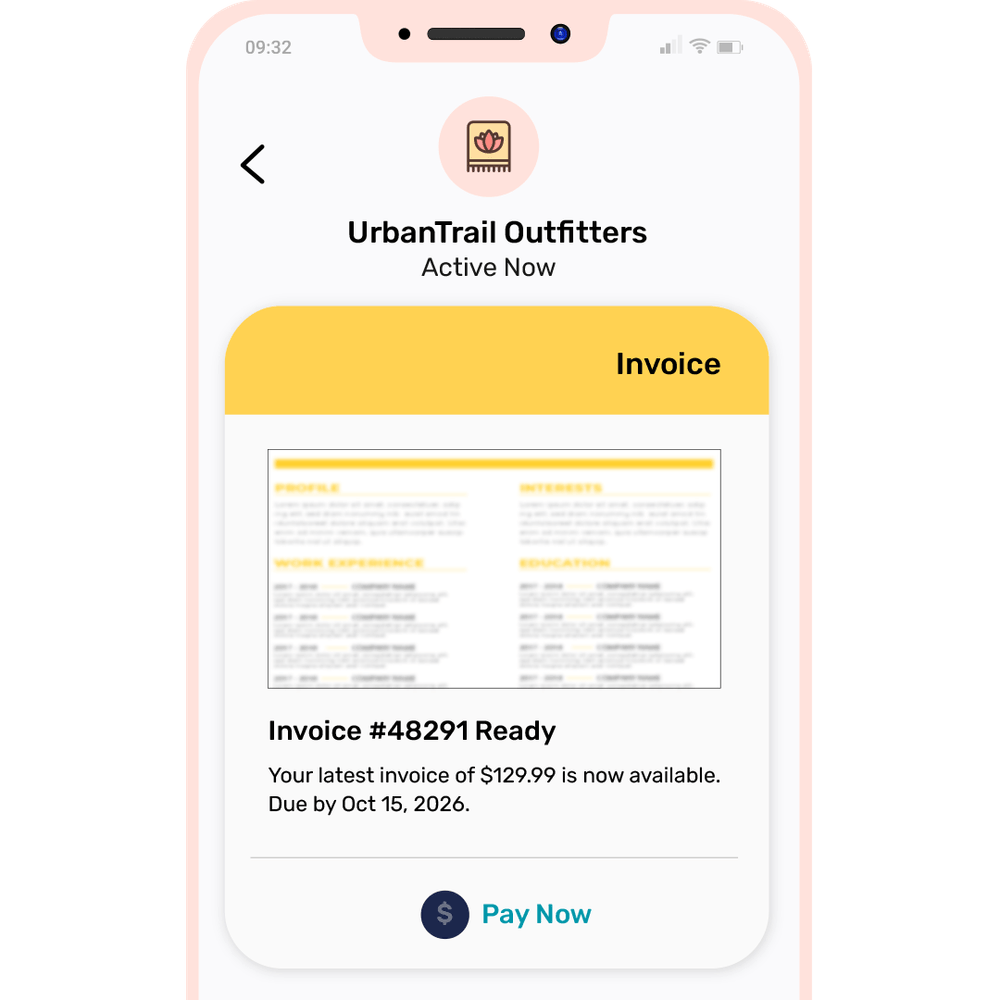
With RCS, you can send digital bills and invoices directly to your customers' messaging apps in a branded and interactive way, replacing plain and cluttered text bills.
Here’s how RCS works and helps when it comes to sending bills and invoices:
- Send detailed invoices explaining the invoice summary, amount due, and due date.
- Include secure payment options, allowing customers to pay directly from the messaging app.
- Offer quick reply buttons, like ‘Request Extension’ or ‘Need Help.’
- Provide downloadable PDFs of bill receipts or invoices within the chat thread.
- Send automated alerts or reminders for unpaid invoices with a ‘Pay Now’ button.
These interactive and visual RCS features enable faster payments, better transparency, increased trust, and reduced friction, boosting customer satisfaction.
12. Omnichannel strategy
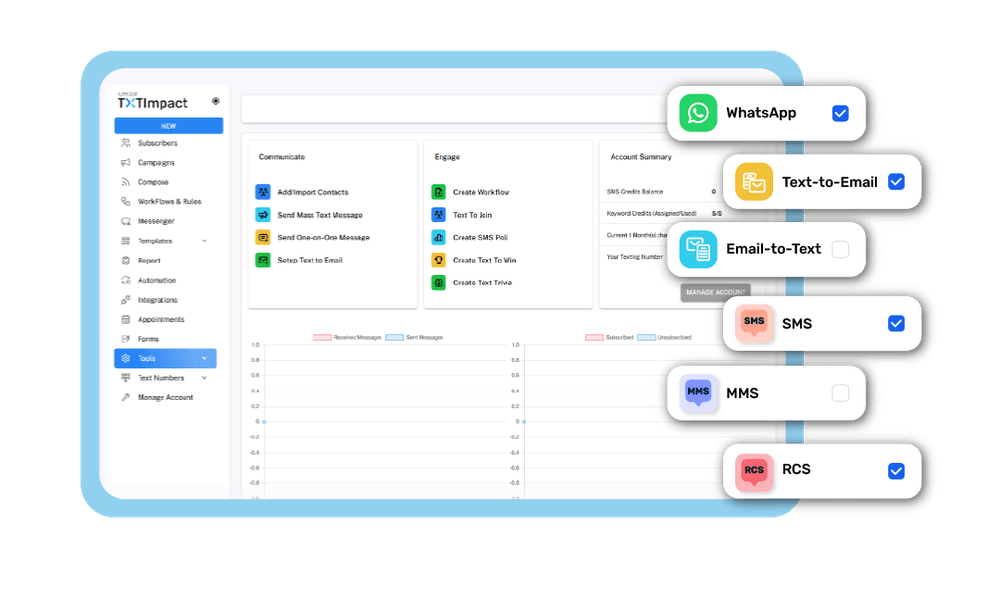
While RCS is a key marketing and communication tool, it works best when complemented by other communication channels, such as SMS, email, in-app messaging, push notifications, and social media channels.
This helps provide a unified and cohesive brand experience to the customers, ensuring consistency across all channels and also enabling cross-channel tracking.
💡 Also Read: Types of RCS messages, Formats, Examples,Categories and File Size limits. |

Industry-Wide Use Cases of RCS
RCS has potential use cases in several industries, including healthcare, financial services, and retail. Here are some of the industry-wide RCS use cases:
Healthcare: Appointment reminders, scheduling, lab results, and tech health support
Retail and eCommerce: Cart recovery, product catalogs, loyalty rewards
Financial services: Loan and credit applications, fraud alerts, and bill payments
Telecommunications: Billing, outage updates, customer support
Travel and hospitality: Booking and travel updates, boarding pass, upsells
Media and entertainment: Ticketing, show promotions, digital passes
Automotive: Servicing reminders, test drive invites, and launch campaigns
Legal: Secure data sharing, deadline alerts, and case updates
Internal B2B communication: IT alerts, compliance updates, and employee engagement
Real-world RCS Case Studies
With a significant surge of RCS adoption worldwide, you can see and read several success stories and case studies of brands and companies that saw impactful results post-RCS messaging adoption. Here are a few examples:
1. Subway
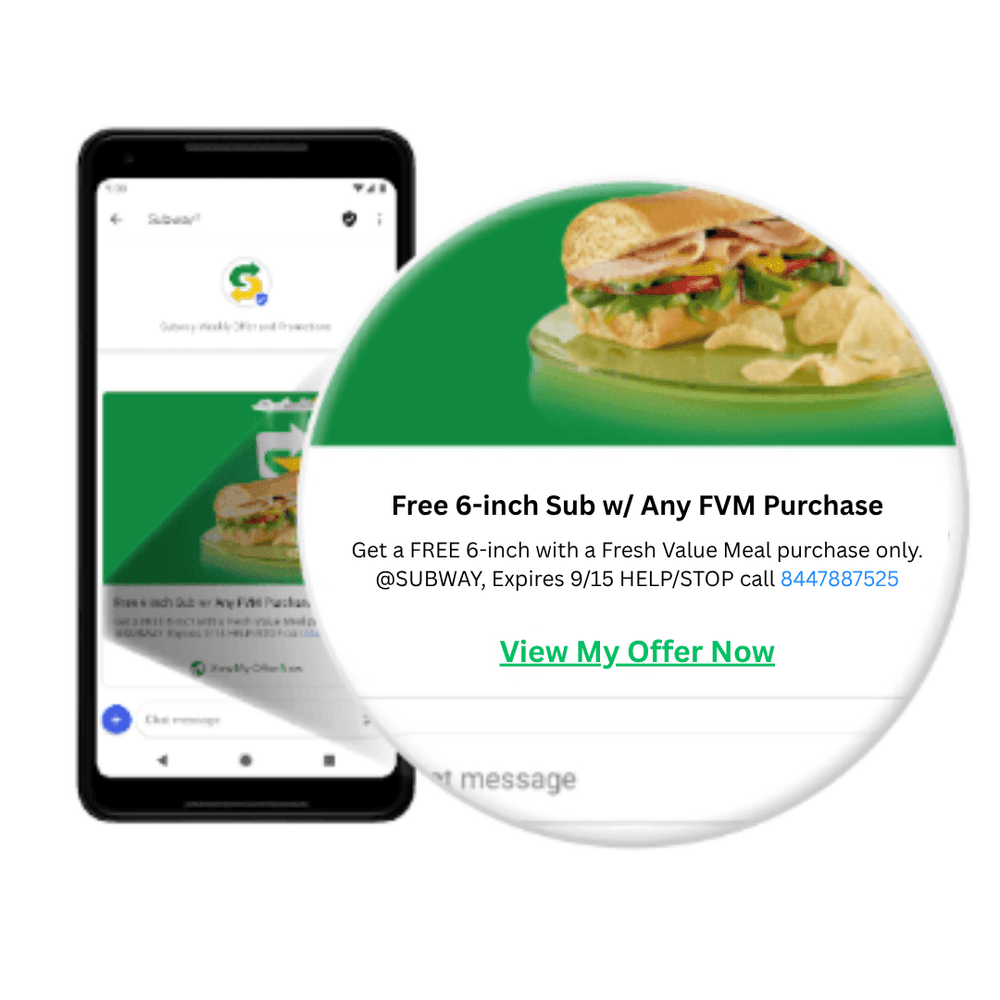
Subway conducted A/B testing for two types of groups (one receiving offers via SMS and the other via RCS), across Houston, Los Angeles, and Cincinnati.
It ran a two-week offer. The first week, Subway promoted two-foot-long sandwiches for $11.99 via both SMS and RCS, and the following week, they promoted a $20 meal deal.
The result?
Thus, by adding branding, interactivity, rich media images, and analytics into RCS messaging, Subway saw higher returns and conversions with RCS. |
2. Clarins
Global skincare and cosmetics brand Clarins focused on testing RCS in three primary areas: launching new products, sharing exclusive offers, and delivering conversational experiences with personalized recommendations to deliver high-end, natural, and engaging customer experiences.
This was the approach they followed to achieve this goal:
|
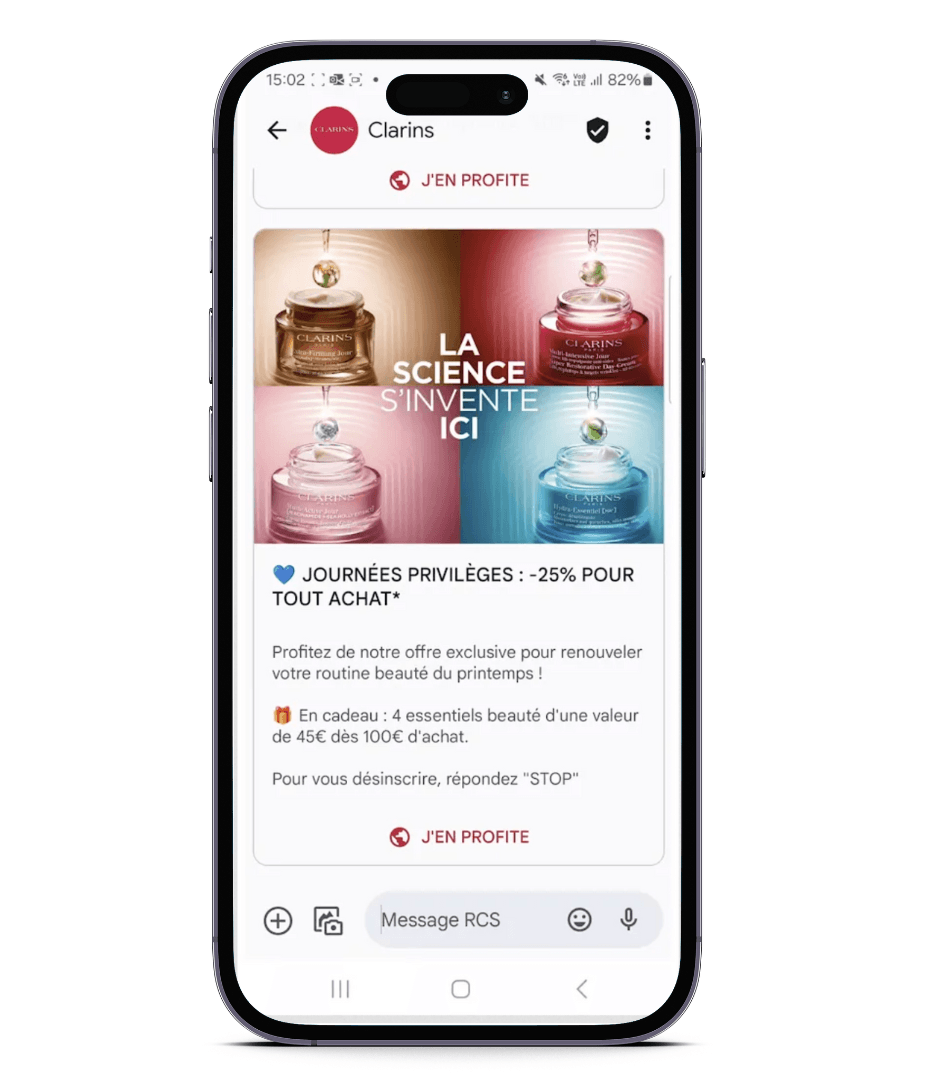
These RCS campaigns helped Clarins achieve a 79% read rate and a 22% CTR on the advent calendar campaign, as well as a 76% read rate and 11% CTR on the promotional campaign.
Thus, using RCS, Clarins could achieve an average 3x higher customer engagement compared to SMS and 10x higher engagement than the industry standard.

Best Practices for Businesses Using RCS
Here are a few best practices for businesses using RCS to ensure an effective and quality RCS business messaging experience and results.
Check the device’s compatibility by conducting a capability check, and ensure SMS fallback is enabled for devices not supported with RCS.
Comply with relevant data privacy regulations, such as the GDPR, HIPAA, and CCPA, as applicable.
Write clear, concise, and consistent messages with clear CTAs.
Use suggested replies for higher and smoother engagement.
Time RCS messages smartly (10 AM - 6 PM, 6-9 PM).
Respect users’ opt-out messages.
Test, measure, and optimize campaigns continuously.
Future Trends in RCS Messaging
As per the TXTImpact 15-Year Industry Study Report, it is predicted that RCS has great potential for revolutionizing business text messaging, driven by several emerging trends and developments. Here are some key trends you must look out for in the future of RCS messaging:
- AI-powered personalization, enabling hyper-targeted RCS campaigns based on real-time context and users’ behavior and preferences.
- Enhanced security with advanced end-to-end encryption and privacy controls, like biometric authentication, especially in the healthcare and banking sectors.
- Advanced multimedia and integration capabilities, including integration with IoT devices, Augmented Reality (AR), voice assistants, and 3D visualization to deliver a more immersive customer experience.
- Omnichannel integration to seamlessly integrate SMS, WhatsApp, email, and other relevant channels for a standard and unified customer experience.
Conclusion
From retail and finance to travel and healthcare, RCS examples and use cases are helping global brands and businesses deliver an interactive and immersive customer experience.
Customers can now browse new products, track their shipments, place new orders, leverage customer support, provide feedback, and more, all within a single messaging thread, without needing to switch applications.
To make the best use of RCS applications in business, TXTImpact is soon to launch its brand-new product, RCS business messaging, with which you’ll be able to deliver a branded, secure, and interactive chat experience to your customers.
With ready-to-use templates, API support, a unified multi-channel experience, seamless integration, and 24/7 developer assistance, TXTImpact’s RCS messaging offers a simple setup, making it ideal for businesses of all types and sizes.
Contact us to learn more.
FAQs
♦ What type of businesses benefit most from RCS?
e-commerce, retail, banking and finance, healthcare, media and entertainment, and any other service-based company offering and prioritizing interactive and engaging customer communication can benefit from RCS messaging and use cases.
♦ How can startups and small businesses begin using RCS?
Startups and small businesses can opt for TXTImpact RCS business messaging services to access ready-to-use templates, APIs, detailed technical resources, and round-the-clock developer assistance to facilitate their journey with RCS.
♦ How do I choose the right RCS provider for my business?
Look for key features like API capabilities, rich media support, integration capabilities, carrier reach and support, customer and technical support, templates, analytics, and compliance support when choosing an RCS service provider. TXTImpact’s RCS services come with all the above-mentioned features and more for your business’s success.
♦ How does RCS support campaigns like polls and feedback forms?
TXTImpact’s RCS Platform enables features like in-message buttons, carousels, quick replies, and suggested replies to make surveys, polls, and feedback forms more interactive and seamless for customers.
About the Author:
 | Mamta Arun (Director Operations) Mamta Arun is a seasoned operations leader with 25+ years in B2B SaaS, SMS marketing, and telecommunications. As Director of Operations at Wire2Air TXTImpact, she ensures seamless service delivery, process automation, and compliance with TCPA and GDPR. With deep expertise in enterprise messaging and workflow automation, Mamta helps businesses enhance engagement, streamline communication, and drive scalable growth. |