MMS Marketing: What It Is, How It Works & How Businesses Use It
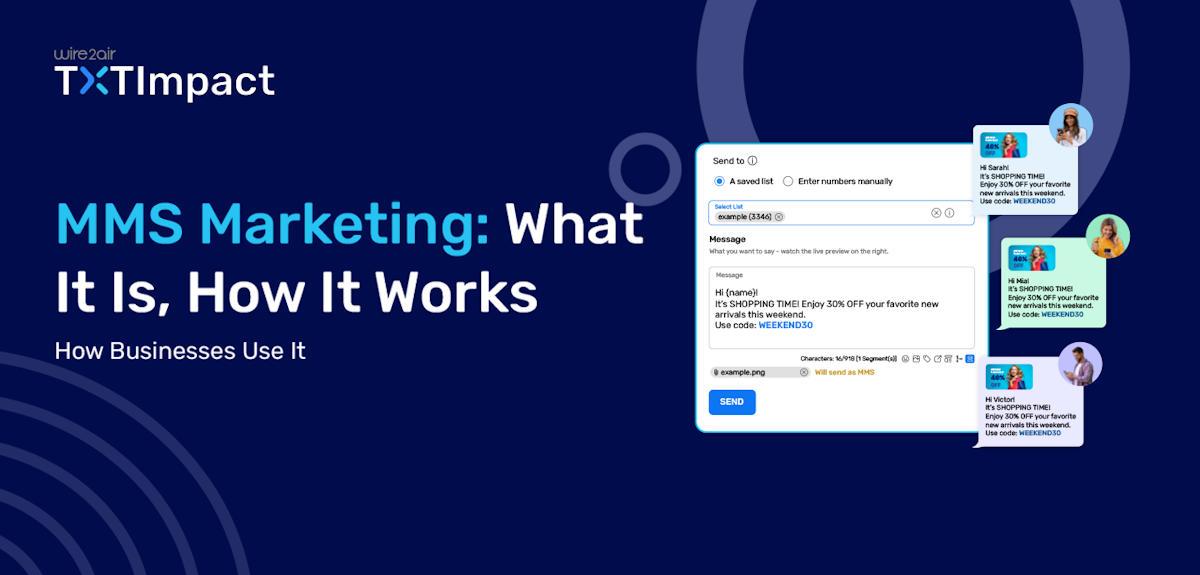
You send a promotional text message with plain words to your customers, and then you send out a vibrant image attached relevant to the text. Which messages get opened, read, and acted on quickly?
It’s definitely the latter one with an image. Studies show that MMS messages consistently outperform SMS messages, with higher open and response rates. Businesses and marketers are looking for new and innovative ways to connect with their audience and drive meaningful conversions.
With the shrinking attention span and crowded inboxes, businesses are turning to richer, more visual mobile messaging experiences. That’s where MMS marketing comes into play.
This article gives an in-depth look at MMS marketing, how it works, benefits, best practices, and how businesses can use it to drive meaningful customer interactions.
Key Takeaways:
|
What is MMS Marketing?
MMS, or Multimedia Messaging Service, is a communication strategy businesses use to reach customers through MMS. Unlike traditional SMS, which is primarily text-based, MMS allows businesses to include rich media, including images, videos, audio, GIFs, and other multimedia content.
MMS messages are especially useful for campaigns where visuals can communicate an offer, product, or message more effectively than text. MMS supports a range of use cases, including product launches, promotions, loyalty programs, event invitations, personalized offers, appointment reminders, and customer engagement.
MMS vs SMS Marketing: What Are The Key Differences?
The key difference between SMS and MMS marketing is the type of content they deliver and the total character length. Let’s look at the differences in more detail.
Feature | MMS Marketing | SMS Marketing |
|---|---|---|
Media supported | Text, images, audio, videos, GIFs, vCards, PDFs | Text only with links |
Character limits | Higher, often up to 1,600 characters | 160 characters per SMS |
Message complexity | Richer and more engaging | Simple and concise |
Costs | Typically higher TXTImpact charges 2 credits per MMS | Typically lower TXTImpact charges 1 credit per SMS |
Engagement and response rates | Higher due to memorable visual and multimedia elements | Good, but limited by plain text |
Delivery and compatibility | Requires a device/plan that supports multimedia messaging (standard on modern smartphones) | Works on virtually every mobile device, including older phones |
Typical use cases | Product promotions, event invitations, campaigns, new product announcements | Quick alerts, reminders, OPTs and notifications, short offers, customer service updates |
Ideal for | Persuasion, brand recall, visual impact | Speed, low cost, high deliverability |
How Does MMS Marketing Work?
Like any SMS marketing campaign, Businesses can also use MMS marketing to create visual campaigns and manage contacts for higher conversions and delivery.
Here’s typically how an MMS marketing campaign works:
- Build an opt-in contact list: Collect phone numbers from customers who have consented to receive marketing messages from your business through forms, purchases, websites, QR codes, or keyword campaigns.
- Create your MMS: Draft a concise MMS message and add relevant media, such as a product image, promotional graphic, GIF, or video. Include a clear CTA such as Shop Now, Book Now, or Claim Offer.
- Segment your audience: Group contacts based on factors such as location, interests, purchase history, or customer behavior to make campaigns more relevant.
- Schedule or automate the campaign: Send the MMS immediately, schedule it for a specific time, or trigger it automatically based on customer actions such as a purchase, signup, or abandoned cart.
- Deliver the message: The messaging platform routes the MMS through the appropriate carrier network and delivers it to the customer's mobile device.
- Track campaign performance: Monitor metrics such as delivery rates, clicks, conversions, opt-outs, and ROI to understand campaign performance and optimize future campaigns.
Now you know how mms marketing works, let's get into how you can create a mms campaign using TXTImpact.
How to Build an Effective MMS Marketing Campaign: Step-by-Step Strategy with TXTImpact
Running a successful MMS campaign takes more than just attaching an image to a text. Here's a practical, step-by-step framework to follow.
Step 1: Define your campaign goal
Start by deciding what you want your campaign to achieve. Whether it's driving sales, promoting an event, generating leads, re-engaging customers, or building awareness, your goal will shape the message, visual, audience, and CTA.
For example, a retailer may use MMS to promote a weekend sale with a 20% discount.
Step 2: Choose a suitable MMS Marketing provider
A reliable messaging provider can help you get your account up and ready to send compliant MMS messages. When you create an account and login with TXTImpact, it facilitates the process and helps you with:
- 10DLC registration: TXTImpact’s AI Campaign Wizard streamlines and ensures fast and rejection-free 10DLC number registration for your business.
- Building a compliant opt-in list: The platform makes it easier to build a permission-based opt-in list using opt-in methods like website forms, QR codes and keyword campaigns.
- The MMS Gallery: The built-in MMS Gallery helps you manage, upload, reuse, and organize every asset, such as images, videos, and GIFs, in one place.
Step 3: Segment your audience
Avoid sending the same MMS to your entire contact list. Segment customers based on factors such as location, purchase history, interests, demographics, or engagement level.
A flash sale reminder to loyal repeat customers might look very different from a win-back offer sent to someone who hasn't purchased in six months.
Step 4: Draft a compelling MMS message
Even with more character space than SMS, conciseness still wins in messaging. Keep the MMS content short, and make the visual content relevant to the offer.
Use high-quality product images, promotional graphics, GIFs, or short videos that support your message rather than distract from it. An effective MMS copy should typically look like as shown in the image below:
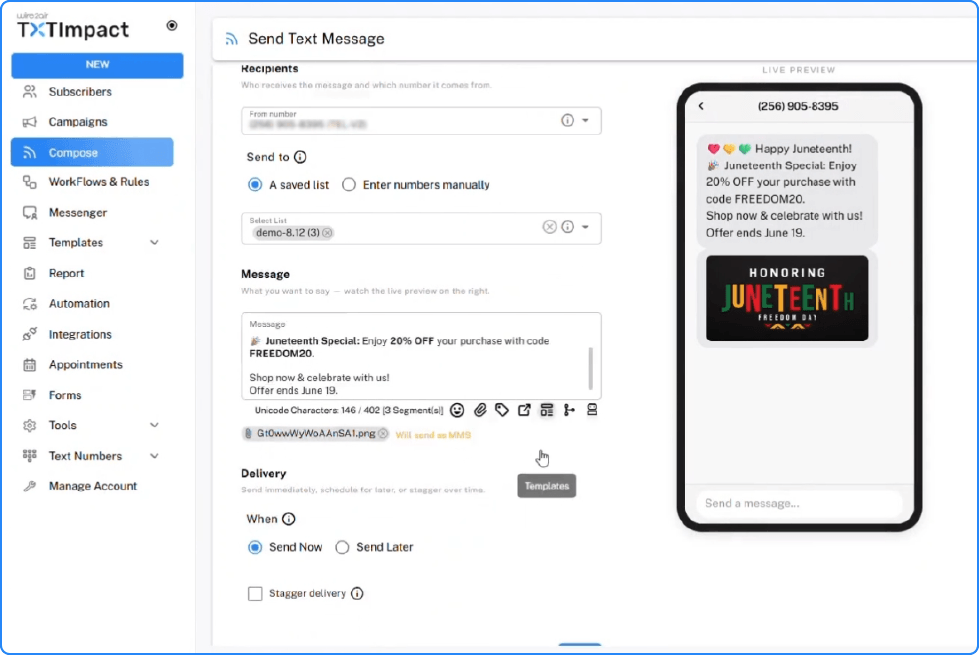
Like any Marketing Campaign, creating an MMS marketing campaign is simple with TXTImpact Omnihub. Select the recipients or contacts you want to send the MMS to, then compose your message. You can even use TXTImpact AI Assist to write the copy for you in your preferred tone and style. Add an image, video, or other media attachment along with your text, then send the message immediately or schedule it for later.
Some Tips you can follow:
- Lead with the value proposition or offer
- Create urgency where appropriate ("Today only," "While supplies last")
- Use a clear, single call-to-action (e.g., "Shop Now," "Reserve Your Spot," "Claim Your Discount")
- Match the tone of the visual (playful, urgent, informative)
Example:
“Juneteenth Special: Enjoy 20% OFF your purchase with code
FREEDOM20.Shop now & celebrate with us! Offer ends June 19."
Step 5: Personalize your messages
Use customer information to make MMS campaigns more relevant. Personalized messages can include the customer's name, previous purchases, location, preferences, or tailored offers.
Example:
“Hi Sarah, your favorite skincare products are 25% off this week. Shop your picks: [link].”
Step 6: Schedule and send messages instantly
Timing can significantly affect campaign engagement. Consider your audience, industry, and purpose when scheduling MMS messages. Avoid sending promotional messages at inconvenient hours.
Example:
A restaurant might promote a lunch special before lunchtime rather than during the middle of the afternoon.
Step 7: Track key KPIs and optimize performance
Monitor campaign metrics such as delivery rates, clicks, conversions, opt-outs, and revenue generated. Businesses can use these insights to improve their audience targeting, content, timing, and offers.
For example, if a product image generates more clicks than a promotional graphic, use similar visual formats in future campaigns.
Key Benefits of MMS Marketing: Why Your Business Should Run MMS Marketing Campaigns
MMS marketing offers several key benefits, making mobile campaigns more engaging by combining text with visual content. Here’s more to it:
- Capture attention faster, resulting in higher open rates: Visual content can make marketing messages more noticeable than text-only messages, helping your offer stand out in a crowded inbox. A compelling image or video in the preview is more likely to stop someone mid-scroll than plain text, leading to faster opens and higher read-through rates.
- Stronger visual storytelling and brand recall: A well-designed MMS message reinforces brand identity through consistent colors, logos, and imagery, helping businesses stay top-of-mind in a way a plain text message simply can't. Businesses can use promotional graphics or short videos to give customers a better idea of what they are offering.
- Better conversion rates and more engaging campaigns: Seeing a product, rather than just reading about it, immediately shortens the gap between interest and action. Retailers, restaurants, and e-commerce brands often see stronger click-through and purchase rates when a visual accompanies the offer, especially for flash sales or new arrivals.
- Personalization at scale: MMS opens the door to dynamic, personalized visuals, such as a custom discount graphic with the customer's name, a birthday message with a tailored offer, or location-specific promotional images. This level of personalization helps messages feel relevant rather than generic, boosting response rates.
- Broader reach without requiring an app: Unlike push notifications or in-app messages, MMS doesn't require the customer to have a specific app installed or an active internet connection beyond standard carrier data. This makes it a reliable channel for reaching customers directly, regardless of which apps they use or how often they check email.
- Drive faster action: MMS can pair compelling visuals with direct CTAs such as Shop Now, Book Today, Claim Offer, or Learn More, making it easier for customers to take the next step.
Common MMS Marketing Use Cases and Business Applications
MMS marketing can support different stages of the customer journey, from attracting new customers to driving repeat purchases. Businesses can use rich media to make promotions, announcements, and customer communications more engaging.
1. Retail and e-commerce
Retailers use MMS to showcase products and run campaigns, such as flash sale announcements, abandoned cart reminders, new arrival ‘lookbooks', seasonal campaign visuals, and loyalty program updates.
The visual element helps recreate some of the browsing experience customers get in-store or online, making it easier to drive impulse purchases.
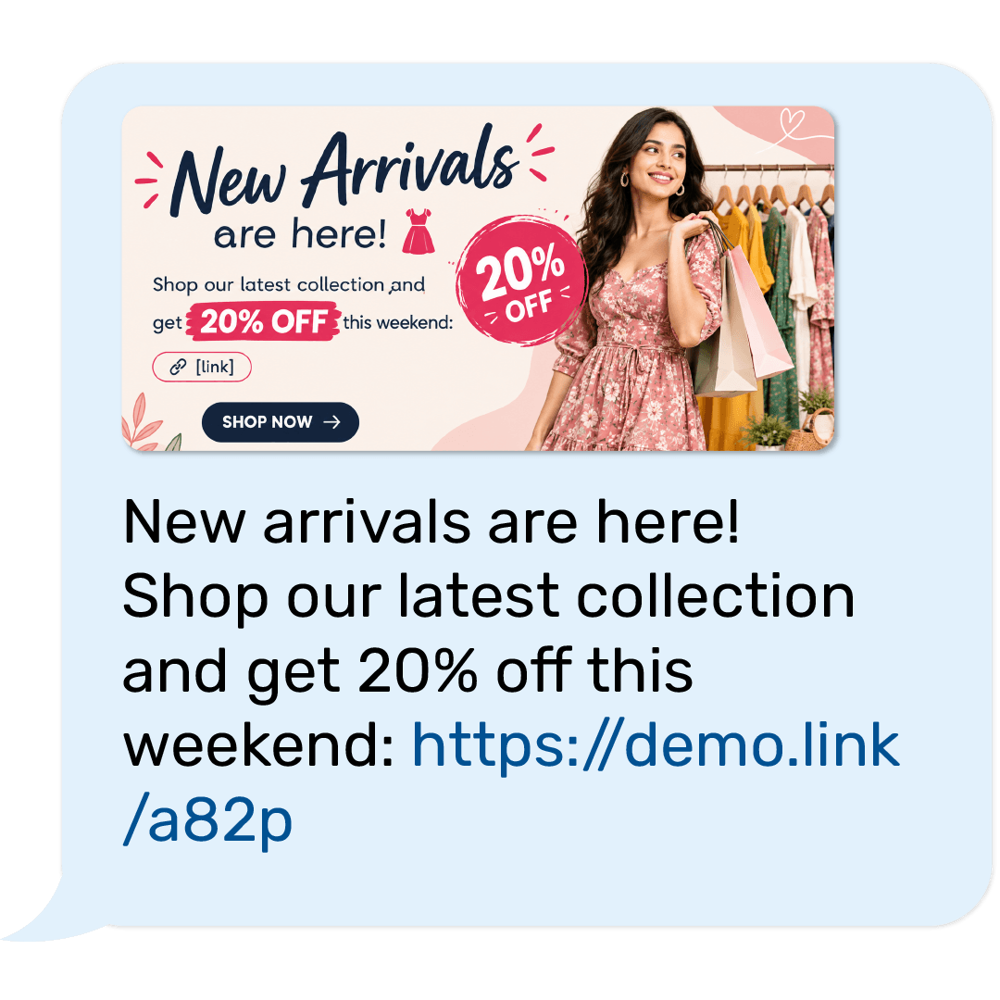
Example: An online clothing store can send a product image with: “New arrivals are here! 👗 Shop our latest collection and get 20% off this weekend: [link].
|  |
2. Real estate
Real estate businesses can use MMS to showcase property listings with photos, open house reminders with the address and a home image, virtual tour links, pricing information, and agent details. This allows potential buyers or renters to explore a property directly from their phones.
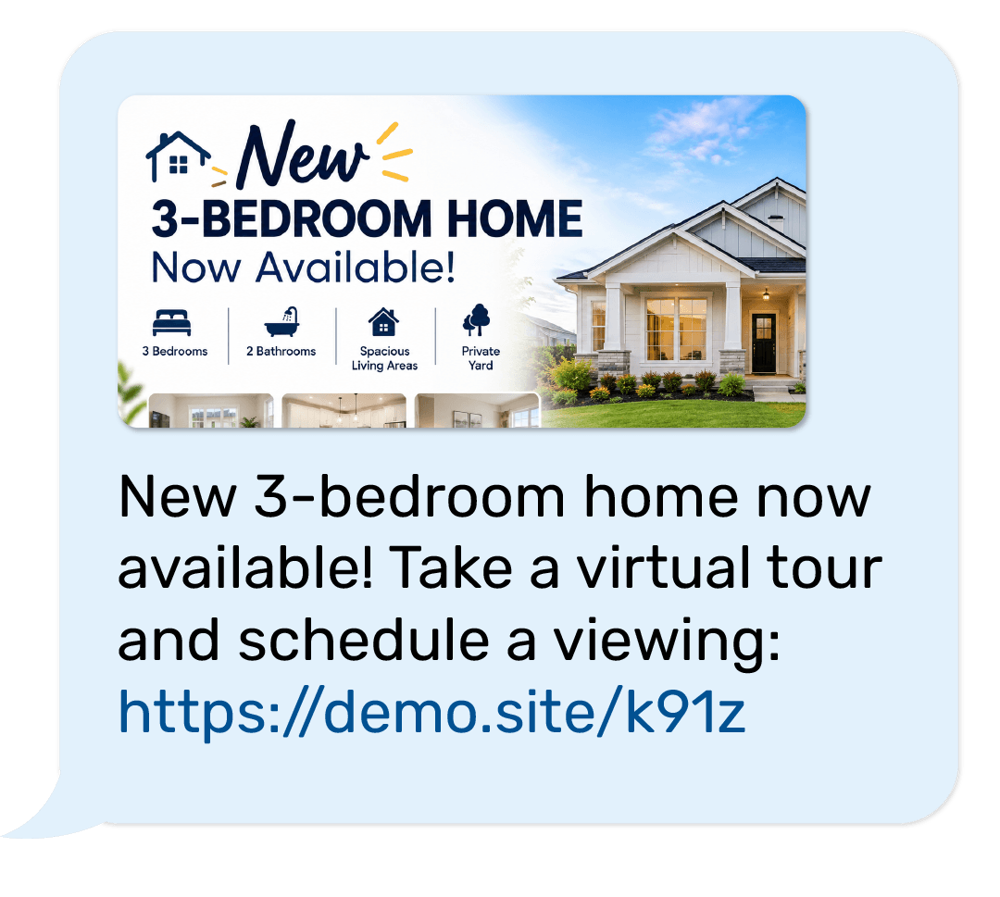
Example: An agent can send: “New 3-bedroom home now available! Take a virtual tour and schedule a viewing: [link].”
|  |
3. Restaurants and food promotions
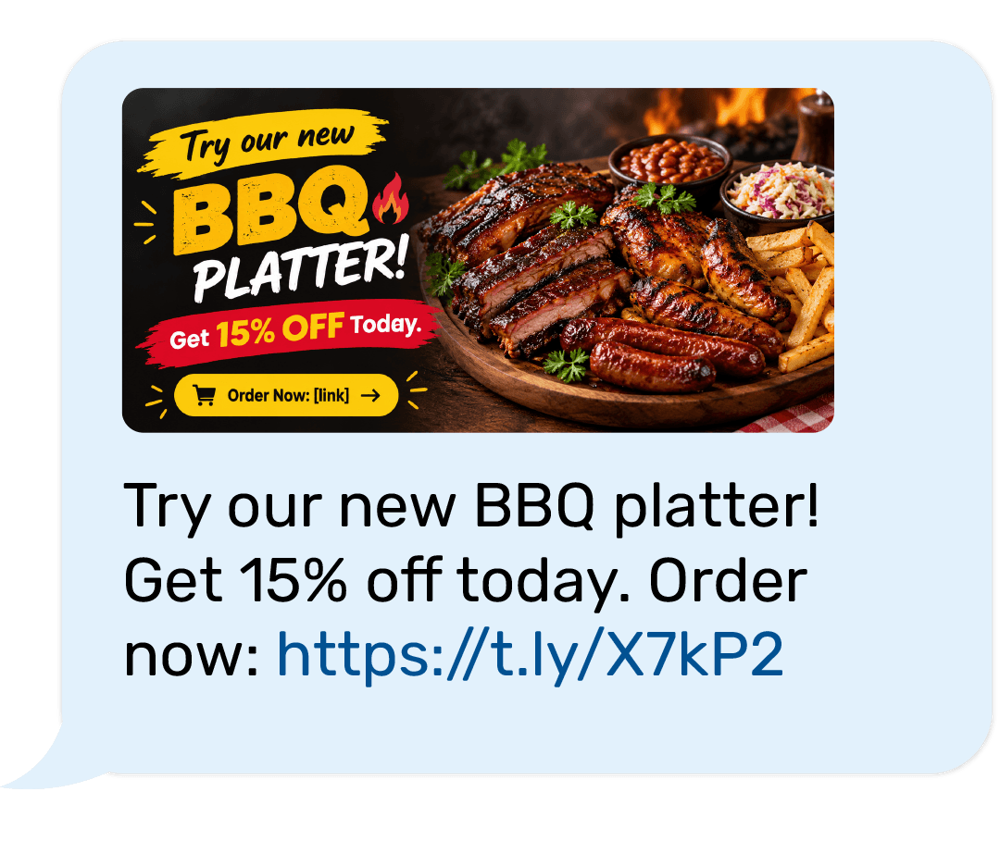
Food businesses can use attractive images or short videos to showcase dishes, new item launches, daily specials, event promotions, seasonal menus, and limited-time deals. Visuals can make food promotions more appealing and encourage immediate orders. Example: A restaurant can send a photo of a new dish with: “Try our new BBQ platter! Get 15% off today. Order now: [link].”
|  |
4. Healthcare and wellness
Healthcare providers can use MMS for appointment reminders with clinic location maps, visual health education content, and post-visit instructions with diagrams.
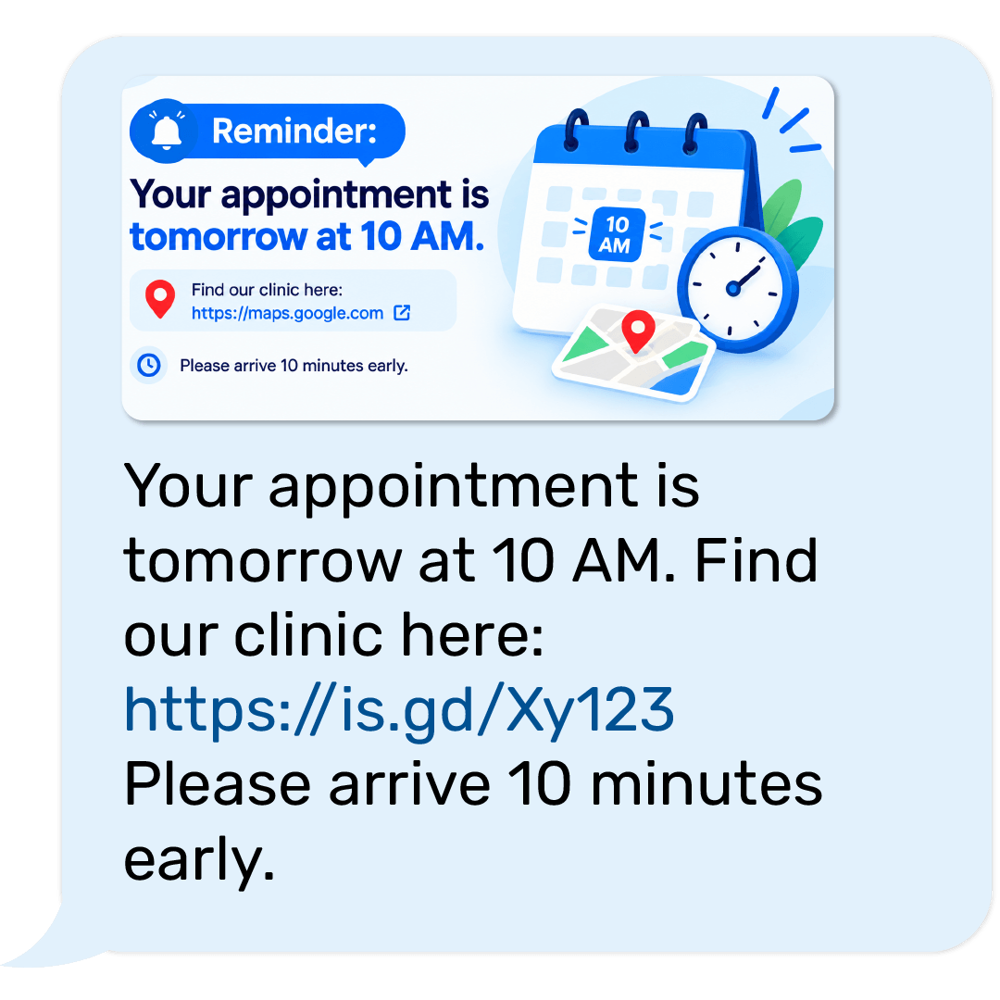
Example: A wellness clinic can send an appointment reminder with a location image or map and: “Reminder: Your appointment is tomorrow at 10 AM. 📍 Find our clinic here: [link]. Please arrive 10 minutes early.”
|  |
5. Events and entertainment
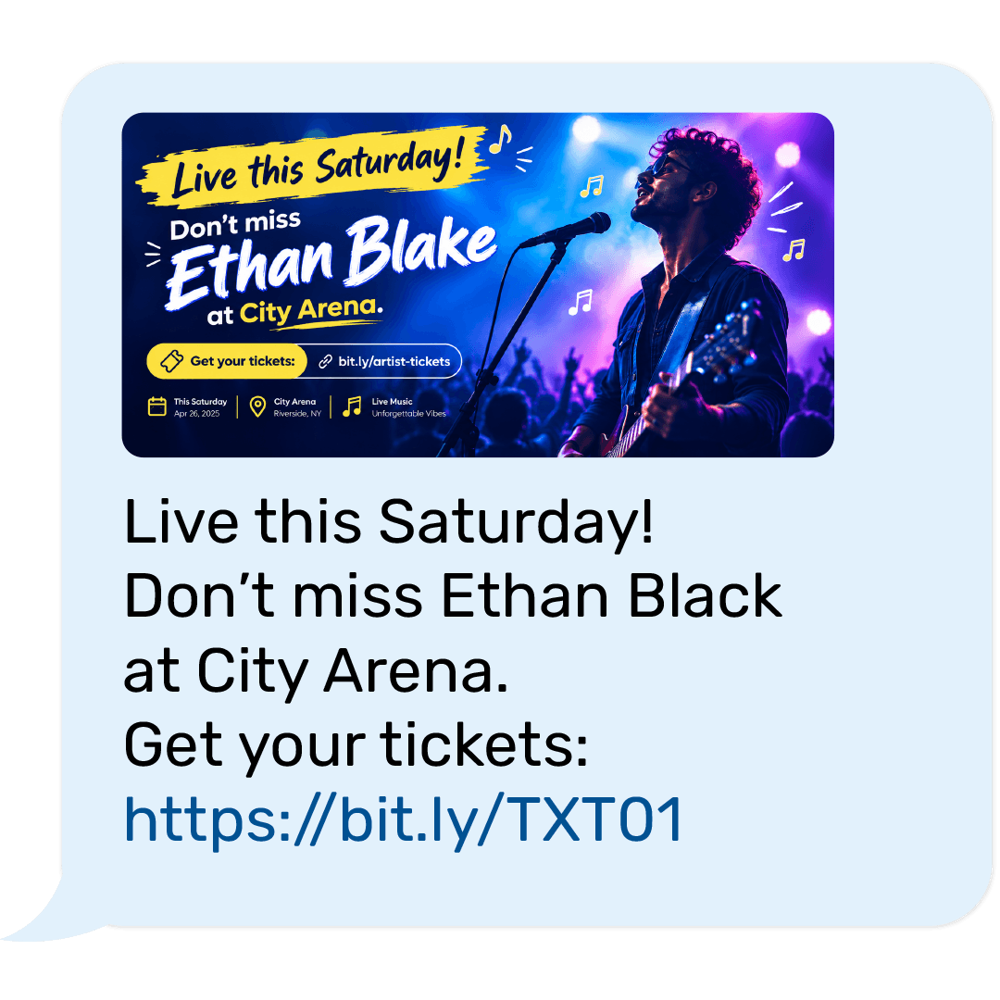
MMS to promote upcoming events with posters, artist images, trailers, or ticket links. MMS can also be used for event reminders and last-minute updates. Example: A concert organizer can send an artist image with: “Live this Saturday! 🎶 Don’t miss [Artist] at City Arena. Get your tickets: [link].”
|  |
6. Financial services
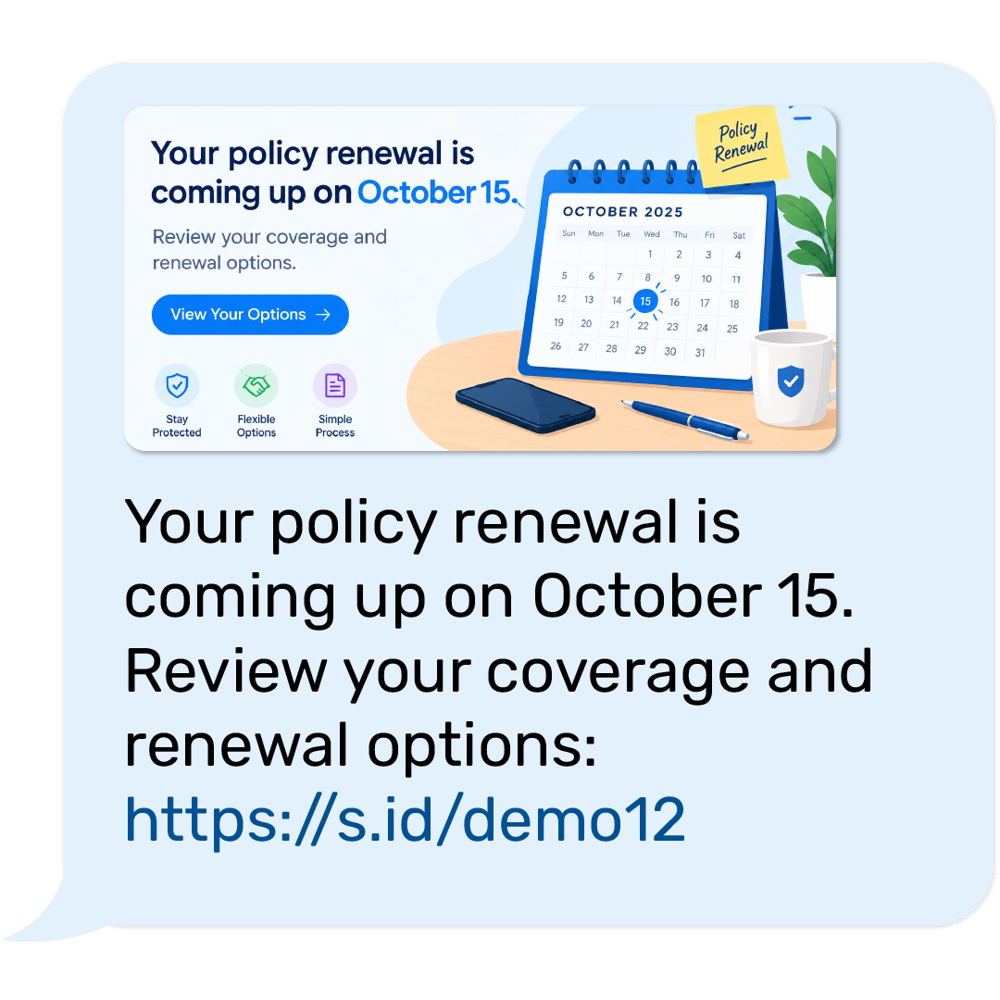
Banks, credit unions, insurance companies, and other financial businesses can use MMS for customer communications, educational content, promotional campaigns, and service updates, as long as the content meets applicable regulatory and security requirements. Example: An insurance provider could send a visual reminder with: “Your policy renewal is coming up on October 15. Review your coverage and renewal options: [link].”
|  |
7. Customer service and transactional messaging
MMS isn't limited to marketing. Businesses can use multimedia messages to provide visual instructions, order updates, service information, or confirmation details. Images can make certain communications easier to understand. Example: An appliance repair company can send: “Your technician will arrive between 2–4 PM today. Track your service here: [link]” | 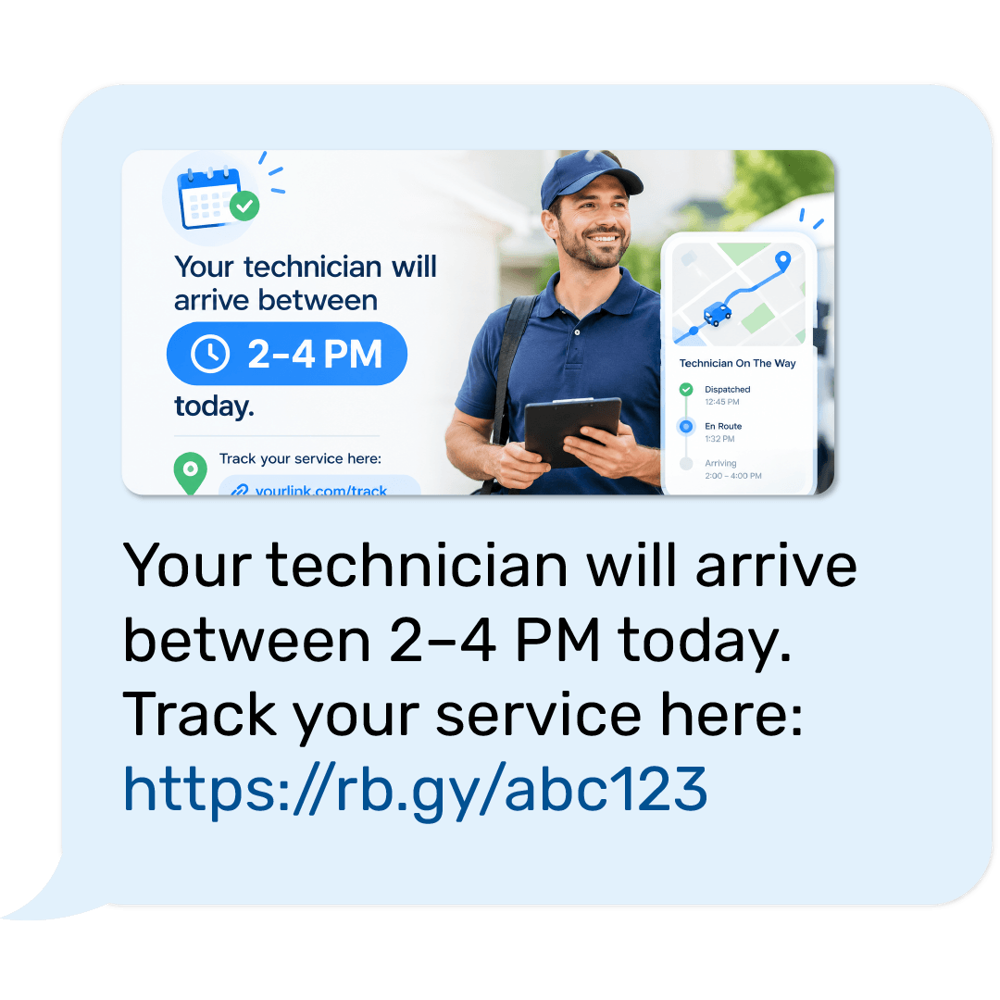 |
8. Non-profits and fundraising
Nonprofits can use MMS to combine visual storytelling with fundraising appeals. Photos, campaign graphics, or short videos can help communicate the impact of donations and encourage supporters to contribute. Example: A nonprofit can share an image from its latest community project with: “Your support helped provide meals to 500 families this month. Help us reach 1,000 families: [link].” |  |
Best Practices for Effective MMS Marketing
Follow these best practices to ensure your MMS messages get delivered, opened, and acted on.
- Keep messages short and clear: Focus on one offer, announcement, or action per message.
- Use relevant visuals: Add high-quality images, GIFs, or videos that support your message.
- Add a clear CTA: Use direct CTAs such as Shop Now, Book Today, Claim Offer, or Learn More.
- Identify your brand: Clearly mention your business name and keep branding consistent across MMS campaigns.
- Personalize your messages: Use names, preferences, purchase history, or other relevant customer data.
- Send at the right time: Consider your audience, time zone, industry, and campaign type when scheduling messages.
- Optimize for mobile: Ensure images, text, links, and landing pages display properly on mobile devices.
- Respect customer consent: Send messages only to opted-in contacts and provide an easy way to unsubscribe.
- Avoid message overload: Limit message frequency to avoid customer fatigue and unnecessary opt-outs.
- Test before sending: Check the message, visuals, links, formatting, and CTA before launching the campaign.
- Track and optimize: Monitor delivery, clicks, conversions, revenue, and opt-outs to improve future campaigns.
MMS Marketing Compliance: What Businesses Need to Know
MMS marketing offers powerful engagement opportunities, but it operates in a heavily regulated space. Non-compliance can lead to carrier blacklisting, steep fines, and reputational damage, so understanding the rules isn't optional.
Here are a few compliance requirements you need to take care of:
1. Follow applicable messaging laws
Businesses should understand the regulations that apply to their target audience and location. In the U.S., the Telephone Consumer Protection Act (TCPA) governs all commercial text and MMS messaging. Key requirements include:
- Prior express written consent before sending any marketing MMS message.
- Consent must be unambiguous; pre-checked boxes or buried terms don't count.
- Consent obtained for one purpose (e.g., order updates) generally can't be used for unrelated marketing messages without separate opt-in.
At the same time, the CTIA (Cellular Telecommunications Industry Association) sets industry best practices that carriers use to evaluate and filter messages. CTIA non-compliance often results in carriers blocking or throttling your messages.
2. Follow opt-in and opt-out requirements
Businesses must obtain explicit customer consent, clearly disclose what types of messages the recipient will receive and how often, and keep records of when and how consent was obtained.
Common compliant opt-in methods include checkbox confirmations during online signup, keyword-based text opt-ins, and verbal consent recorded during a phone call (with proper documentation).
It’s also crucial to include a clear way to opt out or unsubscribe, typically via reply keywords like STOP, UNSUBSCRIBE, or CANCEL. Businesses must honor the opt-out request immediately, suppress opted-out contacts from all future marketing sends, and send a confirmation message acknowledging the opt-out request.
3. Be transparent about promotions
Businesses must not use misleading claims, deceptive offers, or unclear terms when sending MMS messages.
Promotional MMS messages should accurately communicate the offer, eligibility requirements, expiration dates, and any important conditions.
Example: Instead of saying “Everything FREE!” when conditions apply, clearly explain what customers actually receive and what restrictions apply.
4. Short-code vs long-code compliance
The type of number used affects compliance obligations:
- Short codes (5–6 digit numbers) go through a formal vetting and approval process with carriers, including a review of your opt-in flow, message content, and use case.
- 10DLC (10-Digit Long Code) numbers, increasingly used for business texting, also require registration and brand/campaign verification with carriers to avoid filtering.
5. Follow industry-specific guidelines
Certain industries may have additional compliance obligations. Financial services, healthcare, insurance, and other regulated businesses should review the rules that apply to their communications before using MMS for customer outreach.
- Healthcare: HIPAA considerations when sending any message containing protected health information.
- Financial services: Additional disclosure requirements and restrictions on promotional content.
- Alcohol, gambling, and cannabis: Often restricted or entirely prohibited on major carrier networks, regardless of state legality.
6. Maintain accurate contact lists
It’s important to regularly update your contact database and remove invalid numbers, duplicate contacts, and opted-out recipients.
Maintaining accurate records helps reduce unwanted messages and supports compliance.
7. Keep compliance records
Maintain records of consent, opt-outs, campaign content, and messaging activity where required. These records can help demonstrate that your business follows applicable messaging and privacy requirements.
💡 Also Read: SMS Compliance Checklist for Business Texting |
How to Measure MMS Marketing Performance?
Track these key MMS marketing metrics to understand campaign performance and identify areas for improvement.
Metric | Why it matters |
|---|---|
Delivery rate | Shows whether your messages are reaching your intended audience. |
Conversion rate | Shows whether the campaign is generating meaningful actions such as purchases, bookings, or registrations. |
Click-through rate (CTR) | Helps measure how effectively your message and CTA drive traffic. |
Response rate | Useful for measuring engagement in two-way campaigns and customer conversations.
|
Opt-out rate | Helps identify whether your messaging frequency, content, or targeting needs improvement. |
Engagement rate | Provides a broader view of how customers interact with your campaign. |
RoI | Helps determine whether MMS marketing is delivering a worthwhile return. |
Cost per conversion | Helps businesses evaluate campaign efficiency and compare MMS with other channels. |
How Does MMS Marketing Automation Work?
MMS marketing automation allows businesses to send personalized multimedia messages automatically based on customer actions, preferences, or predefined schedules. Instead of manually sending every campaign, businesses can create workflows that trigger MMS messages at the right time.
- Define an automation trigger: Set an action or event that starts the MMS workflow, such as a new customer signup, an upcoming event, an appointment booking, customer inactivity, or an abandoned cart.
- Segment your audience: Use customer data to determine who should receive the automated MMS. Target the right contacts based on location, interests, purchase history, or engagement.
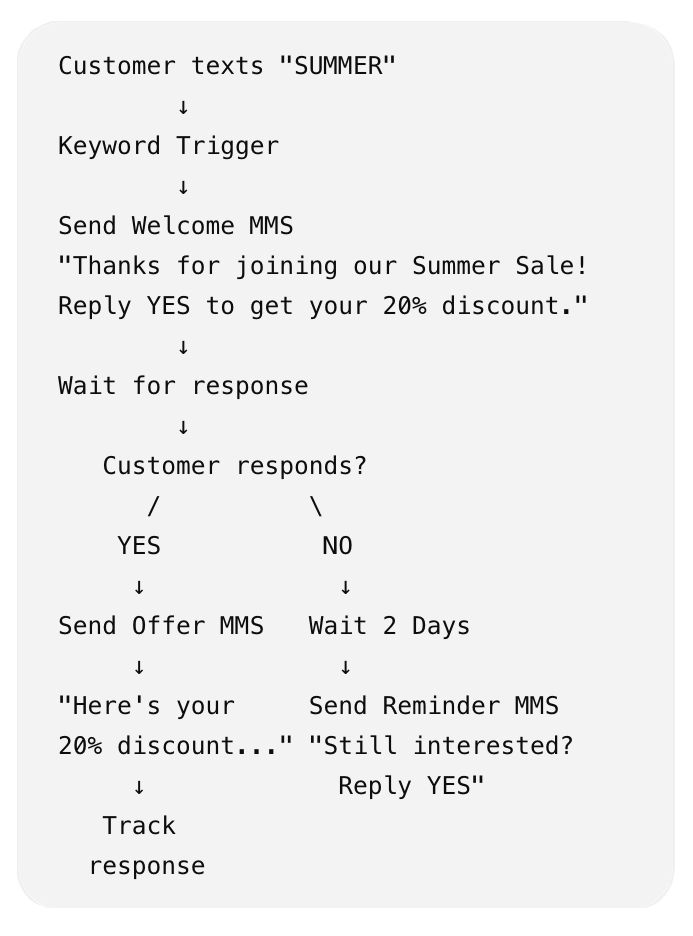
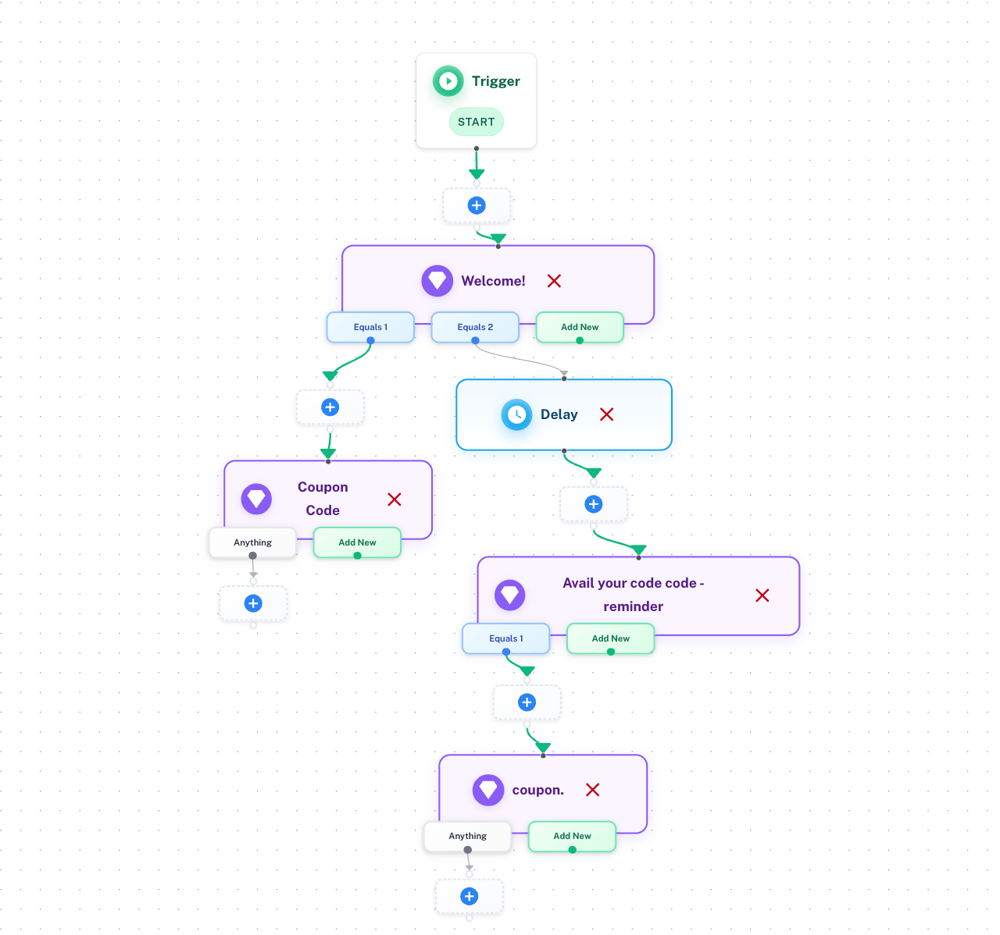
- Set up the workflow: Use a workflow automation tool such as TXTImpact Workflows to define what happens after the trigger. For instance, TXTImpact lets you create message sequences, add delays and conditional logic, and determine when customers should receive follow-ups with a simple drag-and-drop workflow builder.
 |  |
- Send messages automatically: Once the workflow is active, the platform automatically sends MMS messages when the defined conditions are met. This reduces manual work and helps businesses maintain consistent customer communication.
- Monitor and optimize: Track delivery, clicks, conversions, responses, and opt-outs to evaluate the workflow. Businesses can then adjust message content, timing, audience segments, or follow-up steps to improve performance.
What to Look For In an MMS Marketing Platform?
When choosing an MMS marketing platform, look for features that simplify campaign creation, automation, customer management, and performance tracking.
- MMS Support: Send images, GIFs, videos, and other rich media.
- Contact Management: Easily import, organize, and manage customer contacts.
- Audience Segmentation: Target customers based on location, interests, behavior, or purchase history.
- Personalization: Add customer names, preferences, offers, and other relevant details.
- Automation: Trigger MMS messages based on customer actions or predefined events.
- Scheduling: Schedule campaigns for specific dates and times.
- Two-Way Messaging: Allow customers to reply and interact with your business.
- Analytics: Track delivery, clicks, conversions, opt-outs, and other campaign metrics.
- Integrations: Connect with CRMs, e-commerce platforms, marketing tools, and other business software via MMS API or Dedicated connectors.
- Compliance Tools: Support consent management and opt-out requirements.
- Scalability: Handle increasing contact lists and messaging volumes.
- Ease of Use: Choose an intuitive platform that makes campaign creation and management simple.
MMS Marketing Costs: What Affects the Pricing?
MMS marketing costs depend on the provider, messaging volume, pricing model, and features included in your plan. MMS generally costs more than SMS because it supports rich media such as images, GIFs, and videos.
Here are the factors that affect MMS marketing costs:
- MMS Text credit usage: One MMS can consume multiple credits depending on the provider.
- Messaging volume: Higher volumes require larger plans but may offer lower effective costs.
- Platform fees: Monthly subscription costs can vary by provider and plan.
- Carrier and registration fees: Carrier surcharges, 10DLC registration, and other fees can increase the final cost.
- Overage charges: Sending beyond your included credits can significantly increase your monthly bill.
- International messaging: MMS availability and rates may vary by destination.
How Much Does MMS Marketing Cost With TXTImpact?
TXTImpact charges 2 Text credits per MMS, with the Starter plan starting at $29/month for 750 credits, with a wide range of pricing plans suitable for every business requirement with more text credits included and 90 days credits roll over facility.
So, sending 1,000 MMS messages requires 2,000 credits, which fits within TXTImpact's $99/month Professional plan. Similarly, 10,000 MMS messages require 20,000 credits, which moves into TXTImpact's higher-volume pricing.
If we compare TXTImpact’s MMS costs with other providers, here’s what the calculation shows:
| Provider | Credits Per MMS | Credits Required to Send 1000 MMS Messages | Plan needed to send 1,000 MMS | Approx. monthly cost |
|---|---|---|---|---|
| TXTImpact | 2 | 2000 | Professional plan offers 4,000 credits | $99/mo |
| SlickText | 3 | 3000 | 3,500-credit plan | $129/mo |
| Textedly | 4 | 4000 | Elite plan with 5,000 credits | $169/mo |
| EZ Texting | 3 | 3000 | Scale plan (500 credits) + overage credits | Approx. $200/mo |
Clearly, TXTImpact offers affordable MMS pricing with only 2 credits per MMS compared to other messaging providers. So for sending 1,000 MMS marketing messages, TXTImpact is approximately 23%–51% less expensive than the other popular platforms listed. |
Comparison is based on the monthly plan/credits required to accommodate 1,000 MMS messages. Telecom/carrier fees and other applicable charges are excluded.
Is MMS Marketing Right For Your Business?
MMS marketing is a good fit for businesses that can use visuals to make their campaigns more engaging and actionable.
MMS is a good choice if:
- Your products are visual
- You run promotional campaigns
- You run event-based campaigns
- You want higher engagement
- You want personalized campaigns
- You need direct customer engagement
- You use marketing automation
However, MMS isn’t always necessary. SMS may be more suitable when the message is primarily informational, such as appointment reminders, alerts, confirmations, notifications, or short time-sensitive updates. SMS can also be more cost-effective when visual content doesn't add meaningful value.
So, a simple rule is:
Use SMS when the message is the priority. Use MMS when the visual adds value.
Businesses can also combine both channels within the same customer journey for example, using MMS for a product promotion and SMS for a follow-up reminder.
Why Choose TXTImpact to Run Your MMS Marketing Campaigns
TXTImpact is a leading business messaging service provider with 20+ years of industry experience and has served over 30,000 businesses worldwide. Its suite of messaging features includes MMS messaging, which lets you send texts with images, videos, PDFs, GIFs, and audio files, with a character limit of up to 1,600 characters.
Key characteristics include:
MMS developer API that lets you send and receive images directly from your own applications using simple HTTP APIs.
- Business MMS to email lets you receive MMS texts as email and send MMS messages directly from your email inbox with any separate app.
- MMS Marketing allows you to send images or video promotions to your contact lists from a user-friendly web portal.
- Workflow automation lets you trigger images and videos automatically based on customer triggers, actions, dates, or schedules.
- Global reach allows you to reach virtually any phone number worldwide.
- TXTImpact supports several texting numbers, including short codes, toll-free numbers, local numbers (10DLC), and landline texting.
- TXTImpact charges 2 credits per MMS, making MMS marketing affordable at scale.
- TXTImpact optimizes long SMS messages with a higher character limit and converts them into MMS, helping businesses use fewer credits when sending longer messages.
Beyond MMS marketing, TXTImpact also offers other messaging channels, such as RCS messaging and WhatsApp messaging, to help businesses send rich, interactive, and engaging messages to customers on the platforms they use most.
Conclusion
MMS marketing gives businesses a more engaging way to connect with customers by combining the direct reach of mobile messaging with images, videos, GIFs, audio, and other rich media.
However, successful MMS marketing goes beyond adding visuals to a text. Businesses must build permission-based contact lists, create relevant content, personalize campaigns, follow compliance requirements, and track key performance metrics.
Choosing the right MMS marketing platform significantly simplifies campaign creation, automation, analytics, and customer management for businesses. TXTImpact offers key features, including messaging APIs, workflow automation, enhanced deliverability, global reach, and more, to help businesses run effective MMS campaigns.
If you want to get started with MMS messaging and marketing with TXTImpact, contact us or start a free trial to explore the platform.
FAQs
♦ What is MMS marketing used for?
MMS marketing sends promotional and customer-engagement messages with rich media such as images, videos, GIFs, audio, and PDFs.
♦ How much does MMS marketing cost?
MMS pricing varies by messaging provider, plan, message volume, and additional platform fees. Some providers also count an MMS as multiple messaging credits.
♦ Can businesses automate MMS marketing campaigns?
Yes, businesses can automate MMS campaigns using customer triggers, scheduled workflows, segmentation, and other automation features to send messages at the right time.
♦ Is MMS marketing compliant with messaging regulations?
Businesses must obtain proper consent, provide opt-out options, identify themselves clearly, and follow applicable messaging regulations such as TCPA and industry guidelines.
♦ Can MMS be used for two-way customer communication?
Yes, businesses can use MMS for two-way conversations, allowing customers to respond to messages and engage directly with the business.
About the Author:
 | Rahul Kumar (Marketing Specialist) Rahul Kumar is a Digital marketer with 7+ years of experience in SEO, AEO, SMS marketing, WhatsApp marketing, SaaS, and WordPress. He has led successful growth campaigns for startups and tech brands, combining data-driven strategies with compelling content. His work has been featured on top SaaS blogs, and he’s known for turning complex ideas into high-converting digital strategies. |